

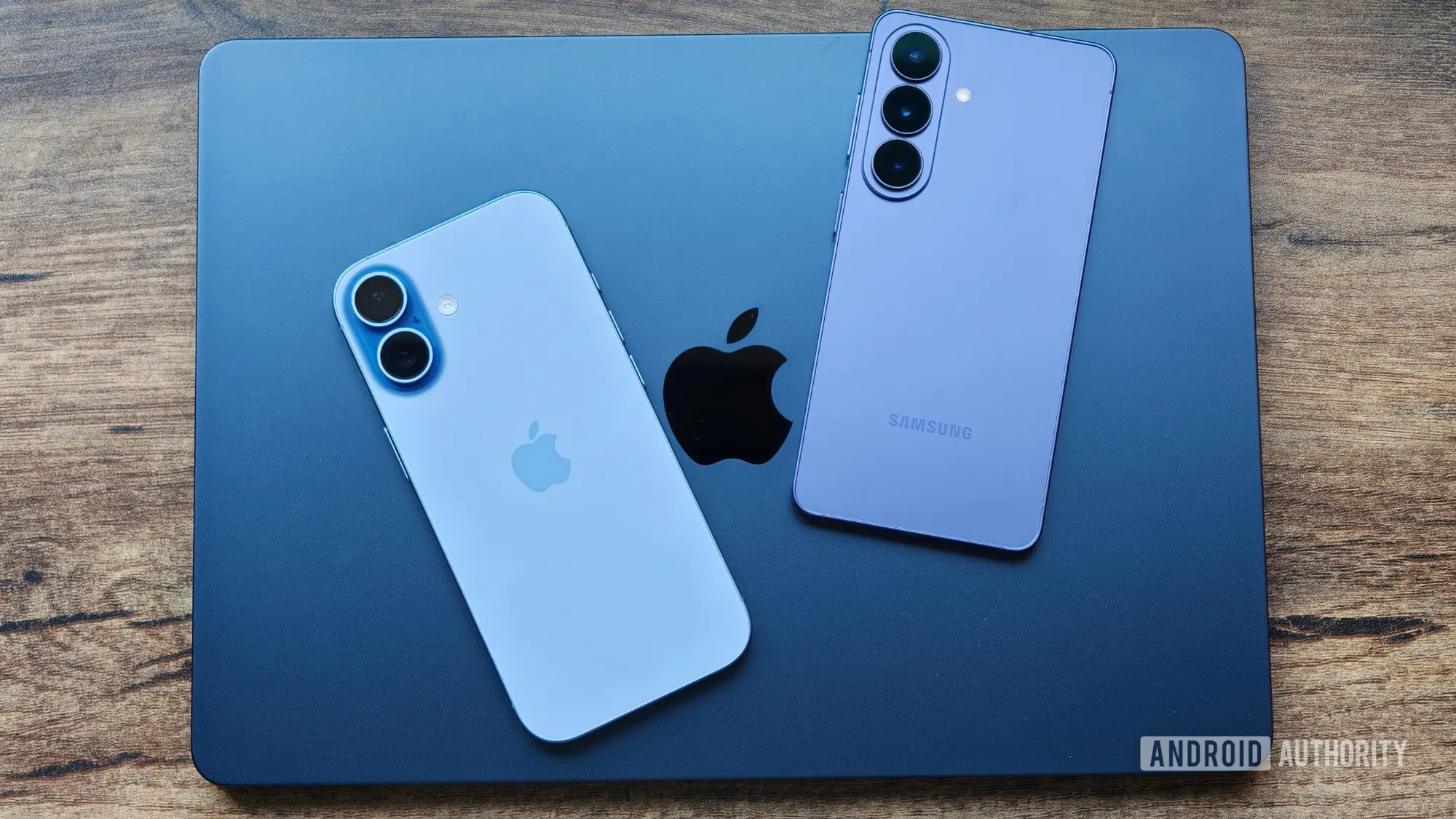
The US smartphone market is experiencing a significant downturn, but the pain is not evenly distributed. According to a new report from Counterpoint Research, total US smartphone sales fell 5.7% year-over-year in the first quarter of 2026. However, Apple defied the trend, growing its iPhone shipments by 1.3%. For Android manufacturers, the picture is far bleaker: Android smartphone sales in the United States dropped by a staggering 14.4% during the same period.
The Galaxy S26 delay: A costly misstep
One of the primary drivers of this divergence is the timing of flagship launches. Traditionally, the first quarter of the year is a battleground between Apple's aging iPhone lineup and Samsung's latest Galaxy S series. In 2026, however, Samsung postponed the launch of the Galaxy S26 series to mid-March. This one-month delay created a vacuum in the premium smartphone segment that Apple was quick to exploit.
With no new Galaxy flagship available in January and February, consumers who were ready for an upgrade often walked into carrier stores and left with an iPhone 17 instead. The research data suggests that Apple capitalized on this premium vacuum by aggressively promoting its devices. Counterpoint noted that Apple outperformed Samsung in promotional power for devices priced above $600, a critical price point for high-margin sales.
The impact of the delay is particularly visible in carrier data. At Verizon, Apple's share of smartphone sales hit an astonishing 77% in Q1 2026. That means three out of every four phones sold at the nation's largest carrier bore the Apple logo. Such dominance underscores the challenge Android OEMs face in the high-end postpaid space, which remains Apple's fortress.
Apple's pricing and storage strategy
While Android manufacturers grapple with rising component costs, Apple has managed to keep its pricing stable for entry-level models. The iPhone 17e, for example, starts at the same price as its predecessor, but Apple doubled the base storage to 256GB. This move effectively gives consumers more value for their money without reducing the perceived premium of the brand.
The stable pricing, combined with aggressive carrier promotions, has allowed Apple to maintain its grip on the premium segment. Even as the overall market shrinks, Apple's ability to attract high-value customers has insulated it from the worst of the downturn. Meanwhile, Android OEMs are forced to compete on price in lower-margin segments, where profitability is already thin.
Android's mixed fortunes: Motorola and Samsung's retail growth
It is not all doom and gloom for Android fans. The report indicates that Motorola and Samsung did see some growth, albeit in different channels. Both brands managed to increase their sales in the prepaid segment and through national retail chains such as Walmart and Target. These channels cater to more price-sensitive consumers, who often prioritize affordability over brand prestige.
Motorola, in particular, has carved out a niche in the sub-$300 market with its Moto G series. The company's focus on value has allowed it to maintain steady volumes even as the overall market contracts. Samsung, despite the flagship delay, has also benefited from its strong presence in the mid-range and budget segments. The Galaxy A series continues to be a bestseller in prepaid and retail outlets.
However, the high-end postpaid space remains an Apple stronghold. Carriers like Verizon, AT&T, and T-Mobile heavily promote premium devices with zero-down financing and trade-in offers. Apple's strong brand loyalty and ecosystem lock-in make it difficult for Android OEMs to compete in this channel, especially when their flagship launches are delayed.
Broader market trends: The smartphone slump
The overall decline in US smartphone sales is part of a larger trend. After a pandemic-driven boom, the smartphone market has faced headwinds from rising interest rates, inflation, and longer replacement cycles. Consumers are holding onto their devices for three or even four years before upgrading, reducing the total available market.
In Q1 2026, the US market saw a 5.7% year-over-year decline, but this was not uniform across segments. Premium smartphones (above $600) have fared better than budget devices, as wealthy consumers continue to upgrade while budget-conscious buyers postpone purchases. Apple, with its dominant position in the premium segment, has been relatively insulated. Android OEMs, which rely more on mid-range and budget sales, have been hit harder.
Another factor is the carrier landscape. Postpaid contracts, which bundle device financing with service plans, are the primary channel for premium smartphones in the US. Apple has successfully secured the most favorable promotional terms from carriers, allowing it to offer aggressive trade-in values and zero-interest installment plans. Android OEMs, by contrast, often struggle to match these offers, especially when they lack the same brand cachet.
The role of 5G and replacement cycles
The transition to 5G, which drove a wave of upgrades in 2020-2022, has largely run its course. Most consumers now own 5G-capable devices, reducing the urgency to upgrade. Carriers have also scaled back the aggressive subsidies they offered during the early 5G rollout, making new devices less affordable for the average consumer.
Apple's iPhone 17 series, released in late 2025, has benefited from a strong upgrade cycle among iPhone users. Many iPhone 13 and 14 owners are now due for an upgrade, and the iPhone 17's incremental improvements (better cameras, faster chips, and longer battery life) have been compelling enough to drive purchases. Android users, especially those with Samsung Galaxy S22 or S23 devices, may have been willing to upgrade to the S26, but the delay pushed them to either wait or switch to Apple.
What the data means for the rest of the year
The second quarter of 2026 will be telling. With the Galaxy S26 now available, Samsung will have a chance to recover some lost ground. However, the early momentum Apple has built could be difficult to reverse. Counterpoint's data suggests that Apple's US market share in Q1 was the highest it has been in years, and the company shows no signs of slowing down.
Android OEMs will need to rethink their strategies. Samsung's decision to delay the S26 launch may have been driven by component shortages or a desire to perfect the device, but the opportunity cost was significant. Going forward, Android manufacturers may need to diversify their carrier relationships and find ways to match Apple's promotional power.
Motorola and Google (Pixel) could also benefit from any churn among Samsung fans who grew impatient waiting for the S26. The Pixel lineup, in particular, has gained traction in the US market thanks to its strong camera performance and timely software updates. However, Google's market share remains small compared to Samsung and Apple.
In the prepaid segment, Android OEMs continue to dominate due to lower prices. Brands like TCL, OnePlus, and Nokia (via HMD Global) also compete in this space, but their volumes are limited. For the Android ecosystem to reverse the current trend, it will need to offer a compelling premium experience that can lure consumers away from Apple's walled garden.
Carrier dynamics: Apple's fortress
The carrier numbers are perhaps the most stark illustration of Apple's dominance. At Verizon, Apple's 77% share means that the company is effectively the default choice for postpaid customers. AT&T and T-Mobile report similar though slightly lower figures, with Apple's share typically around 65-70%.
Carriers have a strong incentive to promote iPhones because Apple users tend to have higher average revenue per user (ARPU) and are less likely to churn. The iPhone's resale value is also higher, making trade-in programs more attractive for carriers. This creates a virtuous cycle for Apple: more sales lead to better carrier relationships, which in turn drive more sales.
Android OEMs have attempted to counter this by offering pre-order bonuses, free accessories, and extended warranty programs. But without the same brand pull, these efforts often fall flat. The Galaxy S26 launch in March may help Samsung regain some momentum, but it will take sustained effort to erode Apple's lead.
In conclusion, the US smartphone market is in a slump, but the impact varies dramatically by platform. Apple's ability to grow while the market shrinks is a testament to its strong brand, stable pricing, and carrier relationships. Android makers, particularly Samsung and Motorola, are left scrambling to defend their turf in an increasingly challenging environment. The second half of 2026 will reveal whether Samsung's delayed S26 launch was a temporary setback or a sign of deeper structural issues for Android in the premium market.
Source: Android Authority News