

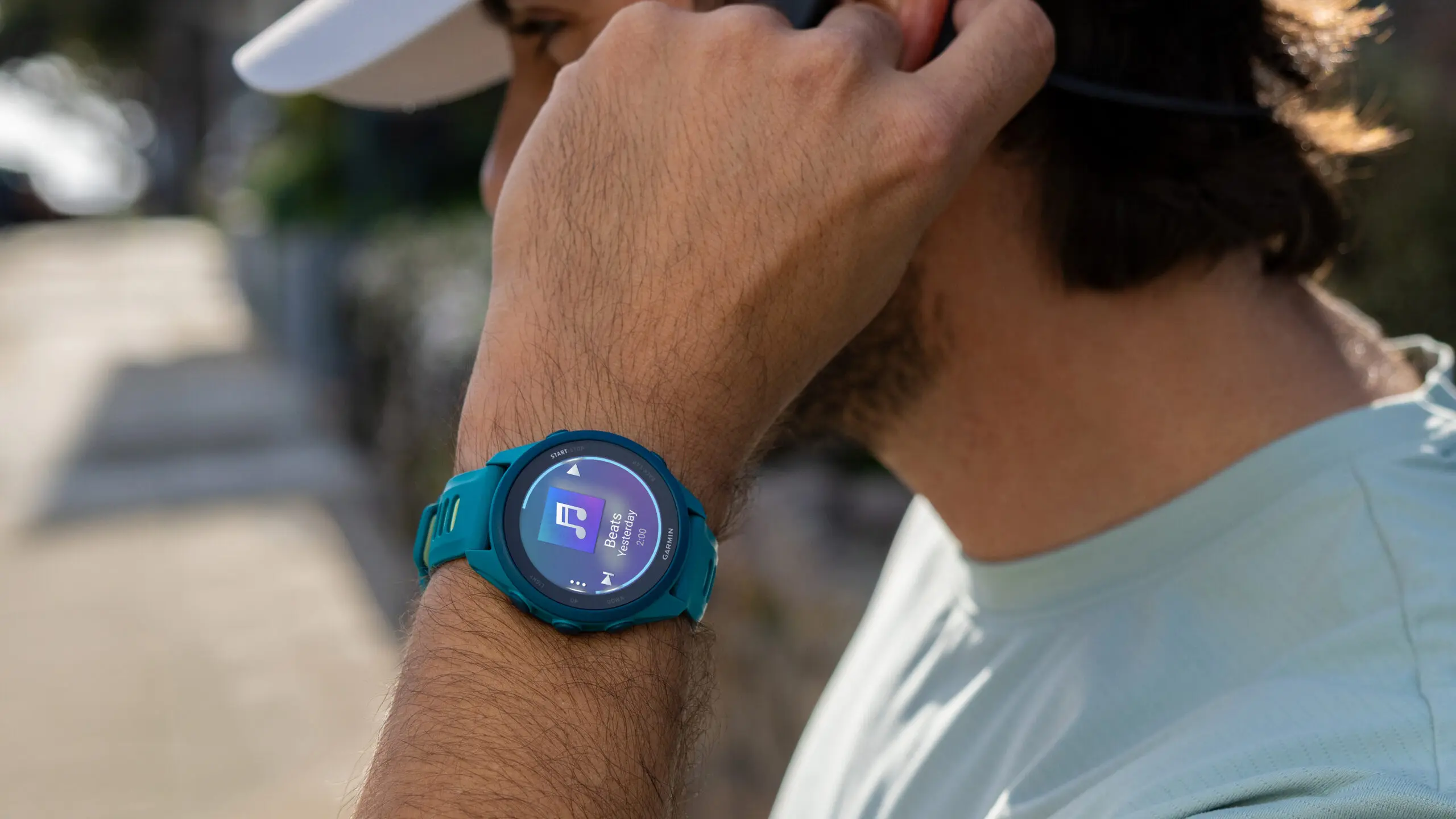
Garmin has just expanded its popular Forerunner lineup with two new entry-level running watches, the Forerunner 70 and Forerunner 170. Designed for runners who want structured training guidance without the complexity or cost of premium models, these watches bridge the gap between basic fitness trackers and high-end multisport computers. Both models feature AMOLED displays, built-in GPS, heart rate monitoring, and a host of advanced metrics that were previously exclusive to more expensive Garmin watches. The Forerunner 70 starts at $249.99, while the Forerunner 170 (with Garmin Pay) is $299.99, and the 170 Music model is $349.99. All three will be available from Garmin.com starting May 15.
A New Chapter for Beginner Runners
Garmin’s Forerunner series has long been the gold standard for running watches, but over the years the higher-end models like the Forerunner 265 and 965 have become increasingly packed with recovery metrics, endurance tools, and race analytics that can overwhelm new runners. The Forerunner 70 and 170 are a deliberate step back toward simplicity—without stripping away the features that make Garmin’s ecosystem so powerful. These watches are aimed at casual joggers, 5K enthusiasts, and anyone who wants to improve their fitness with data-driven insights but doesn’t need heat acclimation scores or training load ratio.
Key to this approach is the inclusion of adaptive Garmin Coach plans. Previously, Garmin Coach was a free adaptive training program available on compatible watches, but it often required a higher-tier device. Now, the Forerunner 70 and 170 come with built-in Garmin Coach plans that can adjust based on your performance and schedule. The new watches also include run/walk plans and lower-volume options, making it easier for absolute beginners to build consistency without risking injury. In early testing, these plans reacted realistically to missed runs or unexpected fatigue, offering a more personalized coaching experience than static apps.
Premium Features Trickle Down
Perhaps the most significant upgrade for these budget-friendly watches is the addition of training readiness and training status. Training readiness combines sleep quality, HRV status, stress, and recent activity to tell you how well prepared you are for a workout. Training status gives a longer-term view of your fitness trends—detraining, maintaining, productive, or peaking. Until now, these metrics were reserved for watches costing $500 or more. By bringing them to the $250 price point, Garmin is democratizing recovery insights that can help beginners avoid overtraining and stay motivated.
Both watches also include wrist-based running power and running dynamics. Running power measures your effort in watts, which can be more consistent than heart rate during interval workouts or hilly terrain. Running dynamics capture metrics like cadence, stride length, ground contact time, and vertical oscillation. While these are typically used by serious athletes, even recreational runners can benefit from understanding their form—especially if they are prone to injury. The Forerunner 70 and 170 make this data accessible with simple graphics on the AMOLED display.
Hardware & Design Choices
All three models share a 1.2-inch AMOLED touchscreen, which is a big leap from the MIP screens seen on earlier Forerunners like the 55. AMOLED offers vibrant colors, deep blacks, and better visibility in low light. The watches also retain Garmin’s five-button layout for easy operation during sweaty runs or gloves. Battery life is respectable: up to 13 days in smartwatch mode for the 70, and 10 days for the 170. Both are comfortably ahead of a standard Apple Watch or Wear OS device, which usually need charging every day or two.
The Forerunner 70 comes in six colorways: citron, tidal blue, cool lavender, soft pink, black, and whitestone. The 170 base and Music models are more subdued, with black/amp yellow and whitestone/cloud blue bands. The 170 Music adds vibrant options like teal green with citron accents and red pink with mango tones—perfect for those who want their watch to make a statement.
What’s Missing?
To hit these price points, Garmin left out a few features found on higher-end Forerunners. There’s no barometric altimeter, so elevation data comes from GPS alone. There’s no multi-band GPS, but the standard GPS + GLONASS + Galileo should be sufficient for most urban and suburban runs. No maps or navigation features are included—these watches will show your route afterward but won’t give turn-by-turn directions. Also missing is the ability to customize workout screens extensively, though the out-of-the-box screens are well organized.
For many beginner runners, these omissions are acceptable trade-offs. The core training tools—GPS, heart rate, sleep tracking, HRV status, Pulse Ox, and over 80 sports apps—are all present. The new quick workout feature is a standout: it generates a simple workout suggestion based on how long you want to run and how hard you want to push. For example, you can set a 30-minute “moderate” run and the watch will recommend a warm-up, steady pace, and cool-down with optional strides. This removes the friction of planning your own intervals and is ideal for runners who just want to lace up and go.
The Broader Impact on Garmin’s Lineup
With the Forerunner 70 and 170, Garmin is aggressively targeting the mid-range market. The previous entry-level Forerunner 55 (which used a MIP display and lacked training readiness) launched at $199.99 and is still available, but the 70 and 170 offer so much more for a modest price increase that it makes the 55 feel outdated. Similarly, the Forerunner 245 Music (which has a MIP display and no training readiness) costs $349.99—the same as the 170 Music—but lacks the AMOLED screen and adaptive coach features. This creates a clear value proposition: if you want the most modern features, go for the 70 or 170; if you want the cheapest option, consider the 55.
Garmin’s strategy seems to be to push beginners toward the Forerunner 70, which is $50 less than the 170 but still offers most of the key running features. The only major differences are Garmin Pay and onboard music storage (optional on the 170). For runners who rarely run without their phone, the 70 is an easy buy. For those who want contactless payments or the freedom of streaming music via Spotify or Amazon Music offline, the 170 Music is a reasonable upgrade.
Historical Context: How We Got Here
Garmin first introduced the Forerunner line in 2008 with the Forerunner 305, a bulky device that relied on a separate foot pod for pace. Since then, the series has evolved dramatically. The Forerunner 235 (2015) brought optical heart rate, the 245 (2019) added Pulse Ox, and the 255 (2022) introduced dual-band GPS and training readiness. Each generation trickled features down the lineup—eventually reaching the Forerunner 55 in 2021. Now, with the 70 and 170, Garmin is accelerating that trickle-down effect by bundling AMOLED displays and advanced metrics at unprecedented affordability.
The competition is also reacting. Coros offers the Pace 3 for $229 with a MIP display and excellent battery life, but it lacks onboard workout generation and Garmin Coach. Polar’s Pacer Pro costs around $280 and includes training load but has a smaller ecosystem. Apple Watch SE (2nd gen) at $249 offers deep iPhone integration but only 18-hour battery life and no dedicated running plans. The Forerunner 70 lands right in the sweet spot: it’s purpose-built for runners, lasts nearly two weeks, and now includes adaptive coaching that evolves with the user.
Final Thoughts on the New Forerunners
Garmin’s Forerunner 70 and 170 are more than just incremental updates—they represent a strategic shift to make serious training tools accessible to everyone. By including AMOLED displays, training readiness, adaptive Garmin Coach, and quick workouts, the company is ensuring that beginners can start their running journey with the same insights that elite athletes use. The prices are aggressive, the feature set is generous, and the timing is perfect as spring running season begins. For anyone who has been eyeing a Garmin but balked at the cost of the high-end models, the Forerunner 70 or 170 may be the entry point they’ve been waiting for.
Source: Android Authority News