

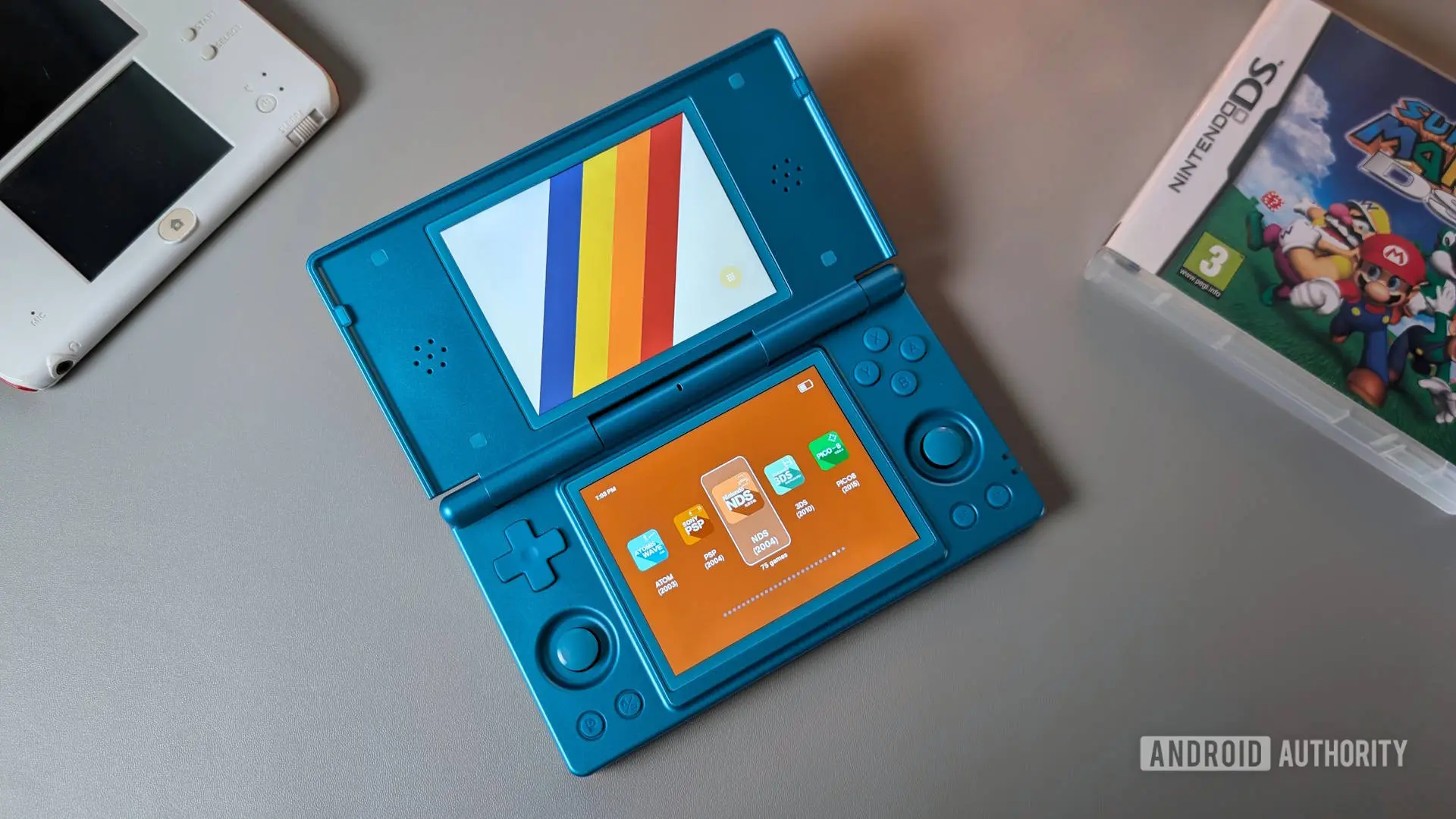
ANBERNIC, a well-known name in the retro gaming handheld market, has introduced a brand-new Linux distribution specifically designed for its RG DS dual-screen device. This move comes as a significant upgrade for the budget-friendly handheld, which originally launched with Android at a price point under $100. The new Linux OS aims to unlock the full potential of the RG DS’s unique hardware, particularly for fans of Nintendo DS emulation.
The RG DS itself is a compact handheld featuring two touchscreen displays arranged in a clamshell form factor, reminiscent of the Nintendo DS and 3DS. It was initially released with Android, allowing users to run a variety of emulators and Android apps. However, the Android experience on a dual-screen device can be cumbersome due to limited software optimization for the second screen. ANBERNIC’s new Linux distribution addresses this issue head-on, providing a purpose-built interface that leverages both displays.
What Does the New Linux OS Offer?
According to ANBERNIC’s announcement via a YouTube video and social media post, the Linux platform is “designed for dual screens.” The top screen serves as the primary menu, showing the main interface, while the bottom screen displays detailed sub-menus such as game lists, emulator information, settings, and more. This setup allows for a more intuitive navigation experience, similar to the original Nintendo DS. Users can also swap content between the two screens and adjust the brightness of each panel independently, offering further customization.
A key highlight is the integration of RetroArch, a frontend for emulators that supports a vast range of classic consoles and handhelds. With this Linux distribution, the RG DS can run Linux-native versions of Nintendo DS emulators like DeSmuME or MelonDS, complete with stylus support for touchscreen interactions. This is a major advantage over using Android, where DS emulation can sometimes be less optimized for dual-screen layouts.
Additionally, the OS includes support for navigation via physical controls, such as the D-pad, buttons, and analog stick, ensuring that users are not solely reliant on touch input. Three system themes are available out of the box, allowing for some visual customization.
Installation Process and Dual-Boot Flexibility
One of the most appealing aspects of this release is the seamless installation process. ANBERNIC provides the Linux OS as a downloadable image on its website. Users need to write this image to a microSD card of at least 64GB using a tool like Rufus (on Windows) or balenaEtcher (on Mac/Linux). Once the card is prepared, it can be inserted into the RG DS and the device booted from it. The system will then run Linux directly from the microSD card, leaving the internal Android installation untouched.
To switch back to Android, simply power off the device, remove the microSD card, and boot again. However, it’s unclear whether the user must change the boot order in the device’s firmware or if the RG DS automatically prioritizes the external card. For those who want to keep both operating systems readily available, this dual-boot functionality is a game-changer. It eliminates the risk of bricking the device and allows users to choose the best OS for their needs.
Comparison with Existing Alternatives
The RG DS already supports Rocknix, another popular Linux distribution for retro handhelds. Rocknix offers a polished experience but has historically had limited dual-screen optimization for the RG DS. ANBERNIC’s official Linux distro aims to fill that gap by providing better native support for both displays. While Rocknix is community-driven, ANBERNIC’s official release ensures better integration with the hardware components, such as the touchscreens and physical buttons.
For many users, the choice will come down to preference. Android offers access to the Google Play Store and a wider range of apps, but dual-screen apps are rare. Linux, on the other hand, provides a dedicated gaming experience with superior emulator performance and battery life in some cases. With three operating systems now available—Android, Rocknix, and ANBERNIC’s Linux—the RG DS becomes one of the most versatile budget handhelds on the market.
Hardware Specifications and Pricing
The ANBERNIC RG DS features a quad-core processor, 1GB of RAM, and both a microSD card slot and a headphone jack. The dual 3.5-inch IPS displays offer a resolution of 640x480 pixels each, which is sufficient for retro gaming. The device is powered by a 3000mAh battery, providing several hours of gameplay. At under $100, it competes directly with other budget handhelds like the Miyoo Mini Plus and the PowKiddy RGB30, but none of those offer dual screens. The RG DS is uniquely positioned for fans of Nintendo DS games who want a portable solution without breaking the bank.
The handheld also supports Wi-Fi and Bluetooth, enabling multiplayer options and connection to wireless controllers. Gamers can sync saves across devices and even stream to a TV via an optional mini HDMI adapter.
Impact on the Retro Gaming Community
The release of this Linux distribution is a boon for the retro gaming community, which has long sought a dedicated dual-screen device for DS emulation. While other handhelds can emulate DS games using touch-screen overlays or by switching between screens, the RG DS provides a more authentic experience. By offering a Linux OS that fully utilizes both screens, ANBERNIC encourages developers to create or port more dual-screen games and apps.
Moreover, the open-source nature of Linux means that the community can build upon ANBERNIC’s work. Custom themes, performance tweaks, and additional emulator integrations are likely to emerge quickly. The RG DS could become a platform for homebrew games that take advantage of the dual-screen setup, similar to the creativity seen on the Nintendo DS homebrew scene.
Potential Limitations and Considerations
While the Linux distribution is a significant step forward, there are some limitations. The microSD card installation means the OS speed depends on the card’s read/write speeds; using a slower card may result in laggy menus or longer boot times. Additionally, not all Android apps are available on Linux, so users who rely on streaming services or Android-specific utilities may still prefer the Android side. Battery life under Linux is reported to be comparable to Android, but optimizations are ongoing.
Another consideration is that the RG DS’s touchscreens are resistive, not capacitive like modern smartphones. This means they require a stylus or fingernail pressure for precise input. While this is similar to the original DS, it may be less responsive for some users. The Linux OS includes calibration tools, but proper setup is essential.
How to Get Started with the New Linux OS
For those interested in trying the new Linux distribution, the first step is to visit ANBERNIC’s official website to download the latest stable image. It’s recommended to use a high-quality microSD card from a reputable brand to avoid data corruption. The installation guide on the site walks through the process of flashing the image, and there are community forums where users share tips and troubleshooting advice.
Once Linux is booted, users can explore the pre-installed emulators or manually add ROMs for Nintendo DS, Game Boy Advance, NES, SNES, PlayStation, and many other systems. The dual-screen interface makes navigating large libraries a breeze. ANBERNIC has also promised future updates with bug fixes and new features.
The ANBERNIC RG DS, originally dismissed by some as a novelty due to its limited Android software, now emerges as a serious contender in the budget handheld space. The addition of a well-designed Linux OS demonstrates the company’s commitment to expanding the device’s capabilities. For less than $100, gamers can now enjoy a dual-screen experience that was once only possible with Nintendo’s original hardware. Whether you are a collector, a DS enthusiast, or just someone looking for a unique gaming device, the RG DS with its new Linux OS is worth serious consideration.
Source: Android Authority News