

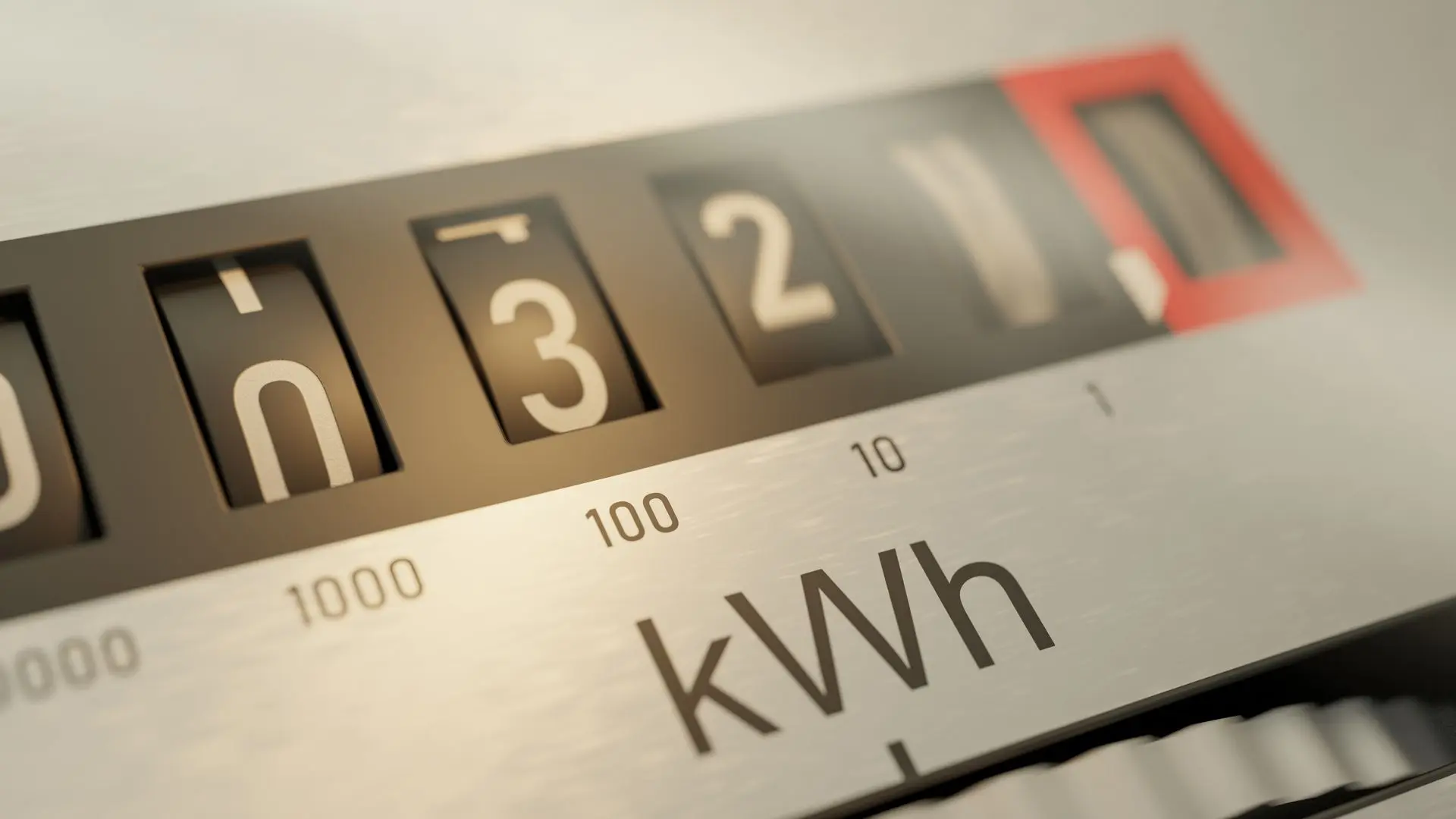
Microsoft's $1 billion investment in an AI-focused data center in Kenya has hit a major roadblock after the Kenyan government warned that the facility's energy demands could necessitate switching off power to half the country. The revelation has sent shockwaves through the tech and energy sectors, raising critical questions about sustainable development in Africa's rapidly digitizing economies.
The proposed data center, which would be one of the largest in sub-Saharan Africa, is designed to support Microsoft's growing cloud and artificial intelligence services across the region. However, the country's power grid, already strained by frequent blackouts and growing demand, would be unable to handle the additional load without drastic measures.
Energy crisis looms over Africa's tech ambitions
According to internal government assessments, the data center's estimated power requirement of over 300 megawatts would consume a disproportionate share of Kenya's current national electricity capacity. With a peak demand of roughly 2,000 megawatts across the country, the new facility would represent a 15% increase in overall consumption. To put this into perspective, the government pointed out that meeting this demand would require rolling blackouts affecting approximately half of Kenyan households and businesses.
The news has cast a shadow over what was hailed as a landmark deal for the region's tech hub ambitions. Kenya has been positioning itself as a leader in Africa's digital transformation, with Nairobi often referred to as 'Silicon Savannah.' Major tech companies including Google, Amazon Web Services, and Huawei have already established a presence. But the power challenge underscores a harsh reality: without reliable and scalable energy infrastructure, the continent's digital dreams may hit a hard ceiling.
Background: Microsoft's global data center expansion
Microsoft has been aggressively expanding its global data center footprint to support its Azure cloud platform and AI services, particularly after the explosion of generative AI tools like ChatGPT and Copilot. In Africa, the company already operates data centers in Cape Town and Johannesburg, South Africa. The Kenya project was seen as a strategic move to cover East Africa and reduce latency for customers in the region.
The choice of Kenya was no accident. The country boasts one of the highest internet penetration rates in sub-Saharan Africa, a young and tech-savvy population, and a government keen on attracting foreign direct investment. Microsoft had pledged to invest $1 billion over the next few years, a sum that would have made it one of the largest single foreign investments in the country's history. The data center was expected to create thousands of jobs, both directly and indirectly, and accelerate the adoption of cloud computing and AI among local businesses and startups.
But the energy hurdle is not the first setback for big tech infrastructure projects in the region. In 2022, Amazon Web Services faced similar concerns over water usage for cooling in South Africa. Facebook's (Meta) plans for an undersea cable landing in Nigeria were also delayed due to regulatory and environmental issues. These incidents highlight a recurring theme: the mismatch between the scale of Western tech investments and the reality of local infrastructure.
Political and economic implications
The Kenyan government's candid assessment has triggered a political firestorm. Opposition leaders and civil society groups have accused the government of prioritizing a foreign corporation over the welfare of its citizens. 'We cannot sacrifice half the country's electricity just so Microsoft can train its chatbots,' said a member of parliament from Nairobi. Others have questioned the lack of transparency in the original deal, noting that the power requirements were likely known from the start.
Economically, the stakes are high. Kenya has been struggling with a slow economy, high unemployment, and a devalued currency. The Microsoft project was seen as a potential catalyst for growth in the tech sector. However, the energy crisis could also have positive spin-offs: it might force the government and private sector to accelerate investments in renewable energy, especially geothermal and solar power, which Kenya has in abundance.
Kenya already generates a significant portion of its electricity from geothermal sources, making it a leader in green energy on the continent. The Olkaria geothermal plants provide a stable baseload, but scaling up to meet additional demand of 300 megawatts would require building new plants, which take years and billions of dollars. Solar and wind farms could supplement but would need battery storage to ensure 24/7 reliability for a hyperscale data center.
Technical challenges and possible solutions
Data centers are notoriously power-hungry. AI data centers, in particular, require even more energy because they rely on powerful graphics processing units (GPUs) that consume up to 700 watts each, compared to a traditional CPU's 150-200 watts. The move to liquid cooling and higher-density racks also increases consumption. For a facility the size Microsoft is planning, the power needs are comparable to a small city.
One potential solution is for Microsoft to build its own dedicated power plant or enter into a direct power purchase agreement (PPA) with a renewable energy provider. The company has set ambitious targets to become carbon negative by 2030 and is already a major buyer of renewable power globally. In the U.S., Microsoft has signed multiple PPAs for wind and solar to power its data centers. But in Kenya, the process of building new generation capacity is mired in bureaucracy and land acquisition issues.
Another option is to phase the data center construction, starting with a smaller capacity and scaling up as the grid improves. However, this would delay the return on investment and potentially push Microsoft to consider other locations, such as Rwanda or Ethiopia, which have also expressed interest in hosting hyperscale data centers.
The government has also floated the idea of a public-private partnership to upgrade the national grid, but that would require substantial funding and coordination with the state-owned Kenya Electricity Generating Company (KenGen) and the Kenya Power and Lighting Company.
Impact on AI development in Africa
If the Kenya project stalls, it could set back the development of AI infrastructure in East Africa by years. Local startups and enterprises rely on cloud services for AI model training and deployment. Without a local data center, they would have to send data to other regions, increasing latency and costs. This would be a blow to the continent's ambition to participate in the global AI boom on its own terms.
Yet, some experts argue that the energy constraints could be a blessing in disguise. It forces a conversation about sustainable tech growth. Africa has an opportunity to leapfrog into green data centers that use off-grid renewable energy, a model that could be replicated elsewhere. Microsoft could pioneer hydrogen fuel cells or battery storage integrated with geothermal to set a new standard.
The company has not officially commented on the government's statement, but sources indicate that internal discussions are ongoing. The project's timeline remains uncertain. Meanwhile, Kenya's energy regulator has called for a comprehensive feasibility study before any further steps are taken.
As the world's biggest tech firms race to build AI infrastructure, the Kenya case serves as a cautionary tale. The next phase of digital transformation must align with energy realities. Without addressing fundamental infrastructure deficits, even the most ambitious tech investments can grind to a halt.
Source: TechRadar News