

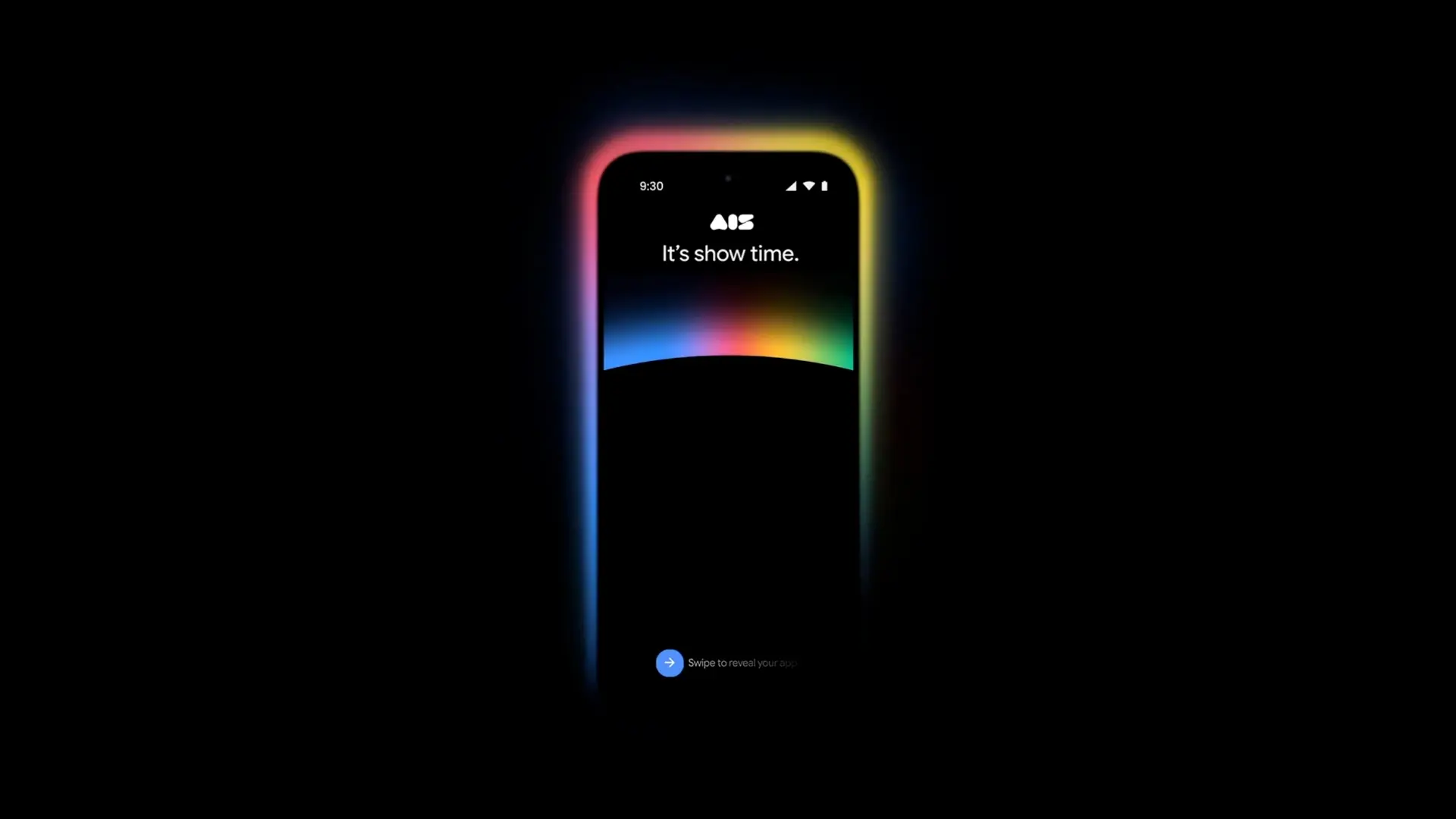
App development is undergoing a radical transformation. Gone are the days when building an Android application required a powerful desktop, a full IDE like Android Studio, and hours of manual coding. The rise of what developers call 'vibe coding'—using natural language prompts and AI to generate code on the fly—has democratized app creation, allowing anyone with an idea to bring it to life quickly. Google has been at the forefront of this shift with its AI Studio platform, and the company is now taking the next logical step: bringing AI Studio to mobile devices.
AI Studio on Mobile: What We Know
The official Google AI Studio handle announced on X (formerly Twitter) that the platform is coming soon to smartphones. The mobile app will serve as a full-featured companion to the desktop version, giving creators and developers the ability to make, iterate, and test new ideas anytime, straight from their smartphones. This removes the requirement of having a laptop handy, making it easier to develop apps on the fly—whether you're at a coffee shop, commuting, or simply relaxing on your couch.
The announcement has already generated significant buzz in the developer community. The mobile app is currently available for pre-registration on the Google Play Store for Android users. iOS users will have to wait a bit longer; while Google confirmed an iPhone app is in the works, pre-orders on the App Store are not yet open, and the website currently displays a 'coming soon' message.
Key Features of the Mobile AI Studio
According to the announcement, the mobile app will include most of the powerful features available in the desktop version, with some optimizations for the smaller screen. One of the standout features is the 'remix' capability, which allows users to duplicate an existing app idea and tweak or expand it to personalize it. This feature encourages collaboration and rapid prototyping—users can start from a template or a shared project and quickly adapt it to their own needs.
Additionally, the mobile app will support full cross-device continuity. Users can start a project on their phone and continue working on it on a desktop, or vice versa. This flexibility is crucial for modern developers who often move between devices throughout the day. The app will also allow users to publish their apps directly from the smartphone, further streamlining the development pipeline.
What Is Vibe Coding? A Brief Background
To understand the significance of this announcement, it helps to look at the broader context of 'vibe coding.' The term, popularized by AI researcher Andrej Karpathy, describes a new style of programming where developers rely heavily on AI code generation tools like GitHub Copilot, Tabnine, or Google's own AI-powered assistants. Instead of writing every line of code manually, developers describe what they want in plain English (or another natural language), and the AI generates the code. The developer then reviews, tests, and tweaks the output.
Google AI Studio is one of the most powerful platforms for vibe coding because it integrates directly with Google's Gemini AI models, giving users access to state-of-the-art natural language understanding and code generation. With AI Studio, users can build fully functional Android apps, web apps, and even XR (extended reality) experiences without deep expertise in traditional programming languages.
The Shift to Mobile
Bringing AI Studio to mobile is a logical extension of Google's strategy to make AI tools as accessible as possible. While desktop-based AI coding assistants are powerful, they tie developers to a desk. Mobile development, by contrast, is inherently portable. By enabling app creation on smartphones, Google is tapping into the growing trend of mobile-first productivity. The mobile AI Studio is designed to be a 'full-featured companion,' meaning it will offer most of the same capabilities as the desktop version, albeit with a touch-friendly interface.
Google has not yet disclosed the full list of features that will and will not make it to the mobile app. However, based on the announcement, users can expect the ability to prototype quickly, test iterations, and even publish finished apps—all from the phone. The remix feature, in particular, could be a game-changer for rapid innovation, allowing developers to build on each other's work seamlessly.
Implications for Developers and Creators
This move has several important implications. First, it lowers the barrier to entry for app development even further. Aspiring developers who may not own a powerful laptop can now start building apps using just a mid-range smartphone. Second, it encourages iterative, on-the-go creativity. Ideas often strike in moments of downtime, and with AI Studio on mobile, those sparks can be immediately turned into prototypes without waiting to get back to a workstation.
For professional developers, the mobile app offers unprecedented flexibility. They can quickly test a new feature, debug a snippet of code, or adjust a UI element while away from their primary machine. The cross-device continuity ensures that work is never lost—projects sync seamlessly between devices via Google's cloud infrastructure.
The announcement also signals Google's commitment to keeping AI Studio competitive with other AI coding platforms. Microsoft's GitHub Copilot and OpenAI's Codex have made similar strides toward mobile integration, but Google's deep integration with Android and its vast ecosystem gives it a unique advantage. For instance, developers can directly access Android-specific APIs, test apps on real devices (or emulators), and publish to the Play Store—all within the same ecosystem.
Historical Context: Google's AI-Powered Development Tools
Google's journey into AI-assisted development began years ago with tools like TensorFlow, ML Kit, and later, the introduction of generative AI features in Android Studio. In 2023, Google launched AI Studio as a web-based platform that let developers use Gemini models to generate code, write documentation, and debug applications. The platform quickly gained traction among indie developers, hobbyists, and even some enterprise teams.
The mobile release is part of a larger push by Google to integrate AI into every layer of Android development. In early 2024, Google announced Android Studio with Gemini, which brought AI-powered code completion, test generation, and error explanation directly into the IDE. Now, with AI Studio on mobile, Google is extending that capability beyond the desktop, making it possible to develop apps anywhere.
What's Missing? And What's Next?
While the mobile app promises to be feature-rich, some users have speculated about potential limitations. For instance, running complex AI models on a mobile device could be battery-intensive or require a constant internet connection for cloud-based processing. Google has not clarified whether the mobile app will rely on cloud inference or leverage on-device AI capabilities (like those in the Pixel 8 series). Given that Google is a leader in on-device AI (through Tensor chips and Gemini Nano), it's likely that the app will employ a hybrid approach, handling simple tasks locally and offloading complex ones to the cloud.
Another question is about performance. While vibe coding with AI is fast on a desktop, mobile processors may struggle with generating larger codebases or running multiple iterations simultaneously. However, Google's optimization track record—seen in apps like Google Photos and Recorder—suggests they will deliver a smooth experience.
In the long term, this mobile AI Studio could pave the way for even more ambitious features, such as collaborative real-time coding with multiple users, integration with hardware APIs for IoT development, or even the ability to generate apps that run directly on the smartphone without needing a separate build process. Google has not hinted at a timeline beyond 'soon,' but the pre-registration page indicates a public release within the coming weeks.
For now, developers and enthusiasts can head to the Google Play Store to pre-register for the AI Studio mobile app. iOS users are advised to stay tuned for further announcements. With this launch, Google is not just making app development easier—it's making it truly anytime, anywhere.
Source: Android Authority News