

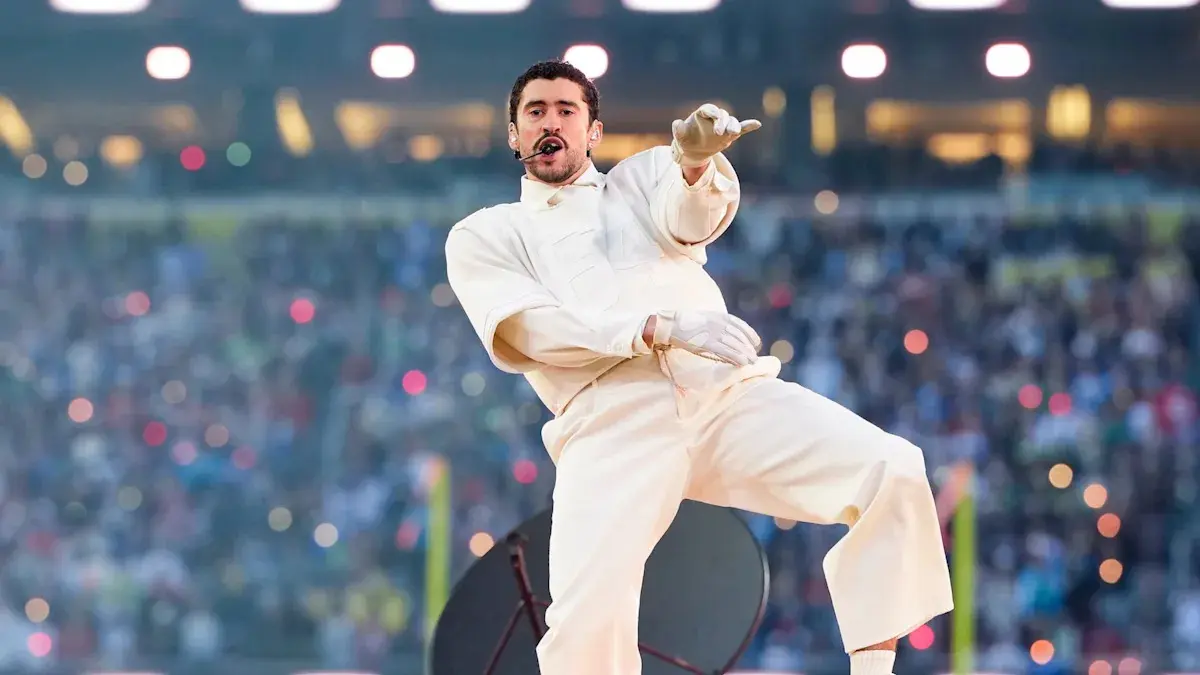
Bad Bunny headlined the Super Bowl LIX Halftime Show a little over three months ago, yet the performance continues to stir controversy. This week, Federal Communications Commission (FCC) complaints about the Puerto Rican artist's set at Santa Clarita's Levi Stadium were obtained by TMZ. The complaints allege obscene language and behavior by the six-time Grammy winner and his dancers, sparking renewed debate about what is acceptable on one of television's biggest stages.
The halftime show, which took place in February 2026, was widely watched by millions across the United States and around the world. Bad Bunny, born Benito Antonio Martínez Ocasio, performed a medley of his biggest hits, including "Yo Perreo Sola" and "Safaera." While praised by many fans for its energy and cultural representation, the performance drew sharp criticism from conservative groups and some viewers who filed formal complaints with the FCC.
Key Complaints and Reactions
One complaint, written by a resident of Mount Holly, North Carolina, on February 13, 2026, explicitly requested an investigation and fines to be issued to NBC and the NFL. The letter argued that the broadcast violated indecency regulations. Another complaint from Claremont, California, stated: "My family, including young viewers, was deeply offended and disturbed by the obscene behavior, language, and imagery." The complainant specifically cited explicit sexual references in the songs and described the performance as "highly suggestive."
Beyond allegations of obscenity, several complaints focused on the fact that Bad Bunny performed entirely in Spanish. One viewer accused the artist of singing and rapping in a "demonic tongue," while another called the performance "anti-American." These criticisms highlight ongoing cultural tensions surrounding non-English performances at major American events.
Political and Celebrity Backlash
The backlash extended beyond FCC filings. Conservative entertainer Kid Rock, known for his outspoken political views, organized an alternative "All-American" halftime show hosted by Turning Point USA. This event was explicitly positioned as a counter-programming move to what some perceived as unpatriotic or inappropriate. YouTuber and athlete Jake Paul also publicly refused to watch the performance and called Bad Bunny a "fake American citizen," despite Puerto Rico being a U.S. territory.
These responses reflect a broader political divide in American culture, where sports and entertainment events often become battlegrounds for ideological debates. Bad Bunny, who has been vocal about social issues and Latino identity, has previously faced similar criticism for his outspokenness and support of progressive causes.
FCC Complaints Process and History
The FCC handles complaints about indecent or obscene broadcast content. However, the agency typically faces a high bar for enforcement. The Supreme Court has ruled that the FCC can penalize broadcasters for indecent content aired between 6 a.m. and 10 p.m., but only if the content is "patently offensive" under contemporary community standards. Fines can reach up to $500,000 per violation, but the FCC often uses warnings or settlements. High-profile incidents, such as Janet Jackson's "wardrobe malfunction" during Super Bowl XXXVIII, have resulted in fines and policy changes, but indecency complaints rarely lead to serious penalties.
In this case, the FCC will likely review each complaint individually. The agency has not yet issued a public statement on the matter. Given the subjective nature of obscenity and the First Amendment protections for artistic expression, legal experts doubt that significant fines will be levied against NBC or the NFL.
Bad Bunny's Career and Context
Bad Bunny is one of the most successful Latin music artists in history. With multiple Grammy Awards, billions of streams, and sold-out tours, he has become a global icon. His Super Bowl performance was a milestone for Latin representation. However, his music often features explicit lyrics about sex, partying, and social issues, which has drawn both acclaim and criticism.
The Super Bowl halftime show has a long history of controversy. From Prince's silhouette to Beyoncé's political statements, each performance walks a fine line between entertainment and provocation. Bad Bunny's show included dancers in revealing costumes and choreography that some deemed too sexual for a family audience.
Since the Super Bowl, Bad Bunny has teased a new musical era. At the Met Gala earlier this week, he appeared in an aged look, hinting at a possible shift in his artistic direction. He has also been involved in legal battles, including a failed copyright case where his label attempted to cover a $465,000 legal tab.
Broader Implications
The controversy over Bad Bunny's halftime show raises questions about language, culture, and censorship. Many Latino fans celebrated the all-Spanish performance as a powerful statement of identity. Others, including some non-Spanish speakers, felt alienated or offended. The FCC complaints reflect a broader anxiety about the changing demographics of the United States and the role of media in reflecting that change.
Critics of the complaints argue that they are motivated by xenophobia and a misunderstanding of artistic expression. Supporters, however, insist that broadcast television should maintain certain standards, especially during events like the Super Bowl, which attracts millions of children.
The NFL and NBC have not commented on the FCC complaints. It remains to be seen whether the agency will take any action. Meanwhile, Bad Bunny continues to dominate headlines and streaming charts, proving that controversy rarely dampens his commercial appeal.
As the 2026 NFL season approaches, the league may consider stricter guidelines for future halftime performers. But given the ratings boost that stars like Bad Bunny bring, it is unlikely that the NFL will shy away from edgy artists. The debate over what is appropriate for network television will likely continue, especially as American pop culture becomes more diverse and boundary-pushing.
Source: Yahoo Entertainment News