

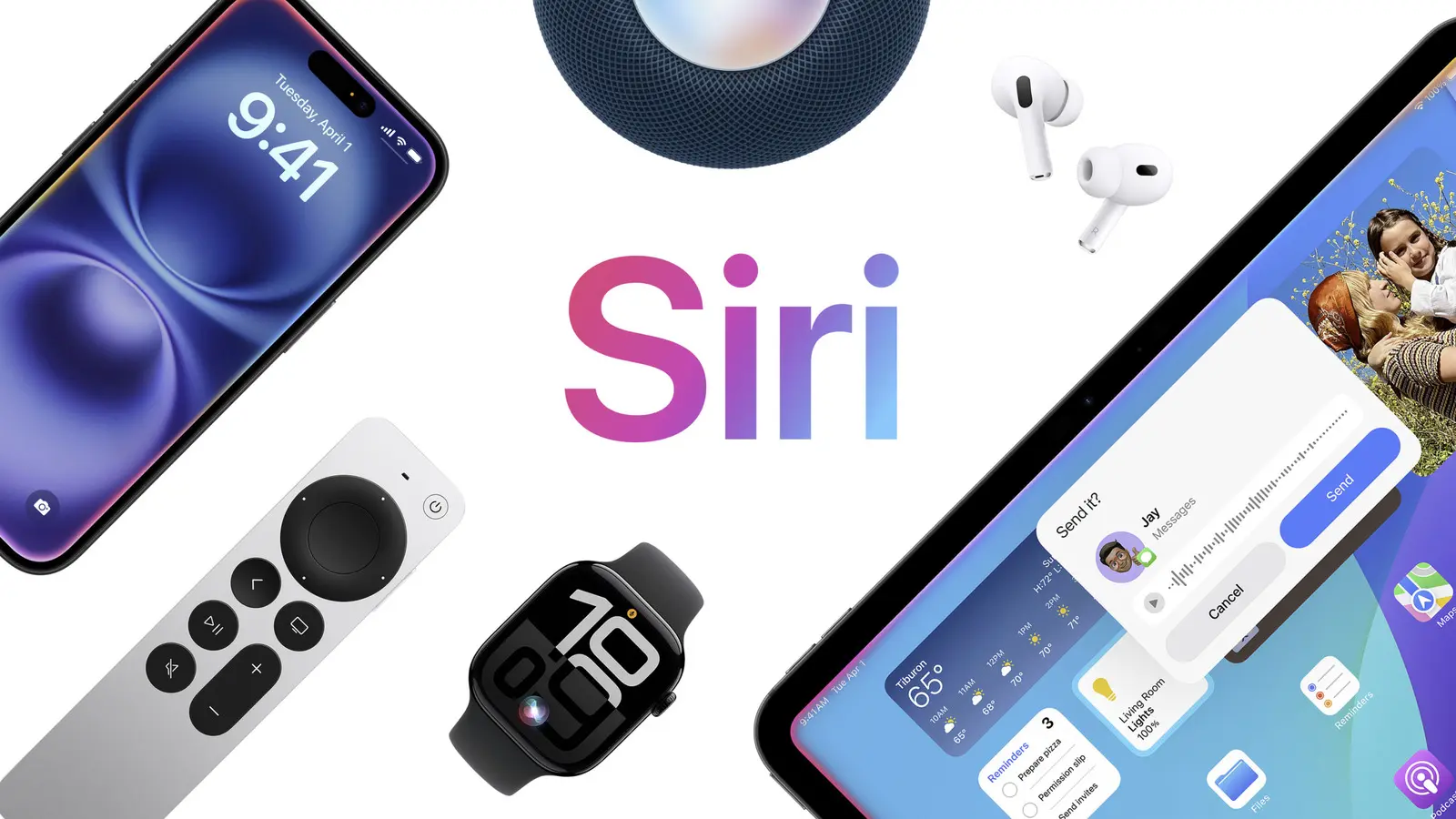
Apple has agreed to pay $250 million to settle a class action lawsuit that claimed the company misled iPhone buyers in the United States about the launch of its AI-powered Siri assistant. The lawsuit, filed shortly after Apple announced the delay, argued that the company knew it could not deliver the promised functionality on time but continued to advertise it as a key selling point for the iPhone 16 lineup and the iPhone 15 Pro. The settlement, which still requires judicial approval, offers financial relief to consumers who purchased these devices with the expectation that a more personalized, context-aware Siri would be available by late 2024.
The controversy began at Apple's Worldwide Developers Conference (WWDC) in June 2024. There, executives unveiled a suite of artificial intelligence features under the brand Apple Intelligence, including a completely revamped Siri capable of understanding the content on a user's screen and taking actions within apps on their behalf. This was a major leap from the original Siri introduced in 2011, which had long been criticized for its limited capabilities compared to competitors like Google Assistant and Amazon Alexa. Apple framed this update as the centerpiece of its AI strategy, promising that the new Siri would arrive within the year.
However, as 2024 progressed, it became clear that Apple was struggling to deliver on that promise. The company did manage to roll out some components of Apple Intelligence, such as improved text editing tools in Notes and Mail, image generation capabilities in Messages and Freeform, and integration with OpenAI's ChatGPT for more complex queries. These features were spread across multiple point releases of iOS 18 and iOS 19 during 2024 and 2025. Yet the flagship feature—a Siri that could deeply understand personal context and operate fluidly across different applications—remained conspicuously absent.
Apple did not publicly address the delay until March 2025, more than five months after the iPhone 16 launched. In a brief statement, the company acknowledged that the new Siri would require more development time and thanked customers for their patience. By that point, many consumers had already purchased iPhones based in part on ads showing off the advanced Siri capabilities. Apple quietly pulled those advertisements after the announcement, but the damage was done. The class action lawsuit, filed shortly thereafter, accused Apple of deceptive marketing practices and a failure to deliver on its promises.
The settlement covers all U.S. residents who bought an iPhone 16, iPhone 16 Plus, iPhone 16 Pro, iPhone 16 Pro Max, or iPhone 15 Pro between the announcement and the date of the settlement. Each eligible claimant is expected to receive a modest sum, though the exact amount will depend on the number of claims filed. Notably, Apple does not have to admit any wrongdoing as part of the settlement—a standard clause in many such agreements. The company also maintains that its advertising was not intentionally misleading, arguing that delays are common in large-scale software development and that it always intended to deliver the features eventually.
In the months following the delay, Apple began working on a solution. By mid-2025, rumors emerged that Apple was in talks with Google to license Gemini, Google's large language model, to power the next generation of Siri. The partnership was confirmed later that year, with Apple announcing that Gemini would help the company achieve the level of intelligence it had originally promised. The new Siri, along with additional AI features, is now expected to be included in iOS 27, which is likely to be released in September 2026. This would be roughly two years after the original target date.
This incident highlights a growing tension in the tech industry between ambitious product roadmaps and the practical challenges of AI development. Apple is not alone in overpromising AI capabilities; companies like Google, Microsoft, and Meta have all faced similar lawsuits or public backlash when features failed to materialize as advertised. However, Apple's strong brand loyalty and premium pricing strategy make it particularly vulnerable to accusations of misleading customers. The $250 million settlement, while large, is a fraction of the revenue Apple generates from iPhone sales alone—the iPhone 16 lineup alone was estimated to bring in over $100 billion in its first year. For consumers, the compensation is relatively small, but the lawsuit sends a signal that companies must be cautious when marketing unproven technologies.
The history of Siri itself is a story of unfulfilled potential. Acquired by Apple in 2010 and launched a year later with the iPhone 4S, Siri was initially hailed as a groundbreaking innovation. But over the following decade, its limited capabilities frustrated users. Rivals like Google Assistant gained ground, and Amazon's Alexa became dominant in smart speakers. Apple responded by acquiring multiple AI startups and improving Siri's underlying technology incrementally, but it never caught up. The Apple Intelligence push was supposed to change that narrative, leveraging Apple's in-house chip design, neural engines, and large-scale data processing to deliver a truly intelligent assistant. The delay undermines that confidence and may have long-term effects on how customers perceive Apple's AI efforts.
Industry analysts have pointed out that Apple's cautious approach to AI—prioritizing privacy and on-device processing—has both benefits and drawbacks. While it protects user data and reduces reliance on cloud servers, it also makes it harder to train and update models quickly. The partnership with Google represents a pragmatic compromise: using Google's cloud-based models to augment Siri while keeping certain tasks on-device. This hybrid approach may become the norm for Apple, but it also raises questions about how much control Apple is willing to cede to a competitor on its home turf.
Looking ahead, the success of the delayed Siri will be critical for Apple's AI narrative. If iOS 27 delivers the seamless, context-aware assistant that was promised, the disappointment of the two-year delay may be forgotten. But if the feature still falls short of expectations, the $250 million settlement could be just the beginning of a broader erosion of trust. For now, Apple is betting that a partnership with Google and extra development time will yield a product that justifies the wait. Whether customers feel the same remains to be seen.
Source: Engadget News