

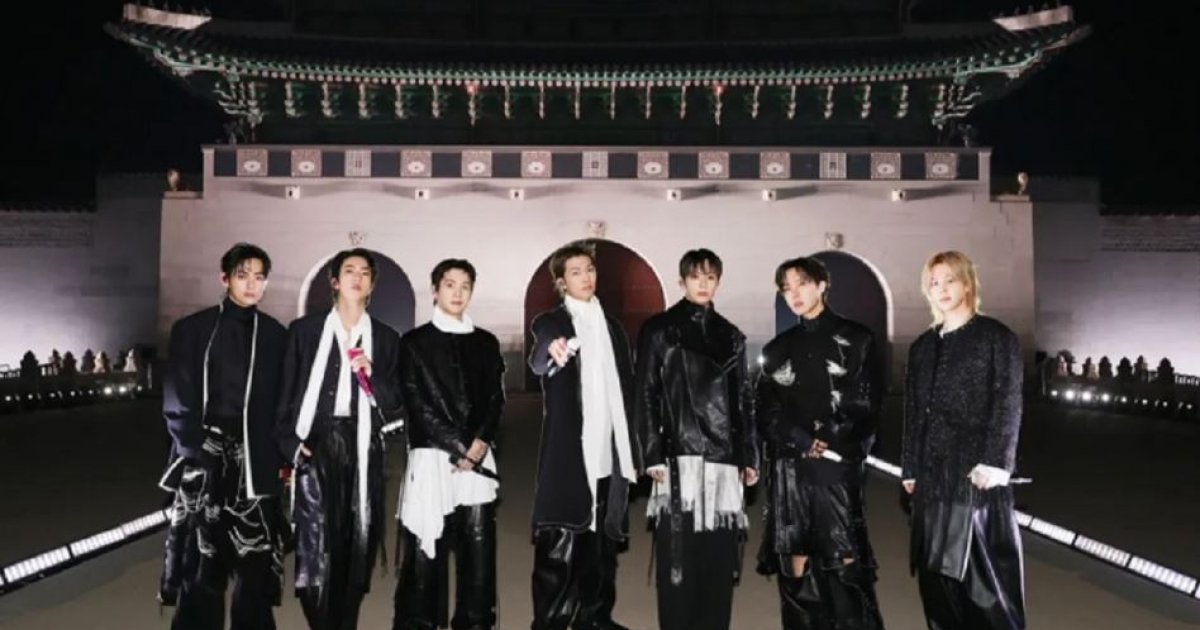
A fresh controversy has erupted online after fans demanded that BTS' name be removed from the credits of Jungkook's FIFA World Cup song 'Dreamers,' reigniting discussions about the recognition of solo work within globally successful K-pop groups. The issue gained traction after several online listings and promotional references reportedly credited the track under BTS instead of Jungkook individually. Fans quickly took to social media, arguing that 'Dreamers' was officially released as Jungkook's solo project during the 2022 FIFA World Cup in Qatar and should continue to be recognized that way.
Many fans expressed frustration over what they described as the erasure of Jungkook's personal achievement. Some called the situation 'embarrassing,' while others insisted that proper crediting matters, especially for projects completed outside BTS' group activities. The debate has spread across Twitter, Instagram, and fan communities, with hashtags like RespectJungkook and DreamersSolo trending in several countries.
Background: Jungkook and 'Dreamers' at the 2022 FIFA World Cup
Jungkook made headlines worldwide in 2022 when he performed 'Dreamers' at the FIFA World Cup opening ceremony, becoming one of the few Korean solo artists to take the stage at one of football's biggest global events. The performance was widely praised at the time and became a landmark moment in his individual career. The song was released as a digital single under Big Hit Music, and all official platforms listed Jungkook as the sole artist. However, some databases — particularly those managed by third-party music services or FIFA's own promotional materials — have at times grouped the track under BTS' discography, likely due to Jungkook's association with the group.
This misattribution is not new. Since the song's release, fans have sporadically pointed out instances where 'Dreamers' was incorrectly listed under BTS. However, the latest controversy appears to have been sparked by FIFA's recent announcements for the 2026 World Cup, which mentioned BTS in connection with future performances but used ambiguous wording that fans interpreted as lumping Jungkook's past solo work into the group's brand.
Fan Reactions and Social Media Uproar
One fan wrote on Twitter, 'Remove the BTS credit from Jungkook's Dreamers. You never added BTS credits to the other members' solo songs. So why are you doing it only to Jungkook? Dreamers was sung only by Jungkook. The other 6 members did not sing the song.' This sentiment was echoed by thousands of users, many of whom shared screenshots of disclaimers or playlist credits that erroneously listed BTS as the artist for 'Dreamers.'
Another fan commented, 'It's 2026 and we're still fighting for basic respect for Jungkook's solo work. The man performed alone on the biggest stage in the world. Give him his due.' Several fan accounts have compiled evidence showing that other BTS members' solo songs — such as 'Seven' or 'Like Crazy' — are never attributed to BTS, further fueling the perception of discrimination.
The hashtag RemoveBTSFromDreamers gained momentum, with some fans even calling for a boycott of FIFA merchandise until the credits are corrected. However, others urged calm, pointing out that the misattribution is likely an administrative error rather than a deliberate slight.
Larger Context: Solo vs. Group Identity in K-pop
The renewed debate has also sparked larger conversations within the K-pop community about how solo ventures by members of major idol groups should be handled. While many fans continue to support BTS as a collective, others believe individual projects deserve distinct recognition separate from the group's brand identity. This tension is not unique to BTS: groups like EXO, BLACKPINK, TWICE, and NCT have all seen similar debates when members release solo music.
Industry analysts note that the line between group and solo work is often blurred by company marketing strategies. Agencies frequently use the group's popularity to boost solo projects, but may also try to retain group identity for licensing and revenue purposes. In Jungkook's case, Big Hit Music has generally been clear about crediting him as a solo artist for 'Dreamers,' but external entities like FIFA may have contractual obligations to credit BTS as a brand partner.
Legal experts point out that copyright and performer rights are complex. The song 'Dreamers' was written by a team that includes producers who worked with both BTS and Jungkook individually. However, the performance is unequivocally Jungkook's. Yet, if FIFA's original agreement for the 2022 World Cup included BTS as a brand ambassador — even if only Jungkook performed — then crediting the group could be part of the deal.
FIFA World Cup 2026: Growing Excitement and Speculation
The controversy arrives amid growing excitement surrounding FIFA World Cup 2026 entertainment plans. The tournament, to be hosted jointly by the United States, Canada, and Mexico, has already announced several high-profile musical acts for the opening and closing ceremonies. Speculation is rife that BTS members might be involved, given their global popularity and past collaboration with FIFA.
However, with the ongoing controversy, some fans worry that FIFA's handling of Jungkook's credits could affect the likelihood of future participation by any BTS member. Others see this as an opportunity for FIFA to set a precedent by properly acknowledging solo artists within group contexts. Industry insiders suggest that the issue might be resolved quietly through private discussions between Big Hit Music and FIFA, but no official statement has been released regarding the crediting concerns.
Historical Parallels: Other K-pop Solo Controversies
This is not the first time a K-pop group's solo work has been misattributed. In 2023, fans of SHINee's Taemin protested when his solo song 'Advice' was listed under SHINee on certain streaming platforms. Similarly, Jennie's 'SOLO' faced occasional mislabeling on some international charts. These incidents highlight systemic issues in how music databases and event organizers handle artist credits for members of large groups.
While BTS is arguably the most prominent case, the same dynamics apply to other groups. The difference is the scale: with BTS's massive global fanbase, any error is amplified quickly. The 'Dreamers' controversy also underscores the unique position of K-pop idols who maintain dual identities — as part of a group and as independent artists. For Jungkook, who has built a substantial solo career post-2022 with hit songs, chart records, and a loyal personal fandom, the fight for proper recognition is part of a larger journey toward individual artistic legitimacy.
What Fans Want: A Clear Resolution
As the debate unfolds, one thing remains clear: Jungkook's 'Dreamers' continues to hold cultural significance for fans who view the song as a defining milestone in his solo journey. Many fans are calling on Big Hit Music and FIFA to issue a joint statement clarifying the credits and ensuring that all future references list Jungkook as the sole performer. Some have also demanded that music streaming services update their metadata to correct any misattributions.
In the meantime, the conversation has spilled into broader discussions about authenticity and respect in the entertainment industry. For fans, it is not just about one song; it is about ensuring that individual achievements are not swallowed by group identities, especially when those achievements are so personal and hard-won. Whether FIFA and the record label will respond remains to be seen, but the noise is unlikely to fade until the credits are corrected.
As World Cup 2026 approaches, the spotlight on Jungkook and BTS will only intensify. How this controversy is resolved could set an important precedent for how the global music industry treats solo work by members of K-pop groups — and whether artists like Jungkook get the sole recognition they have earned.
Source: International Business Times, Singapore Edition News