

Introduction to AccLock Continuous Authentication
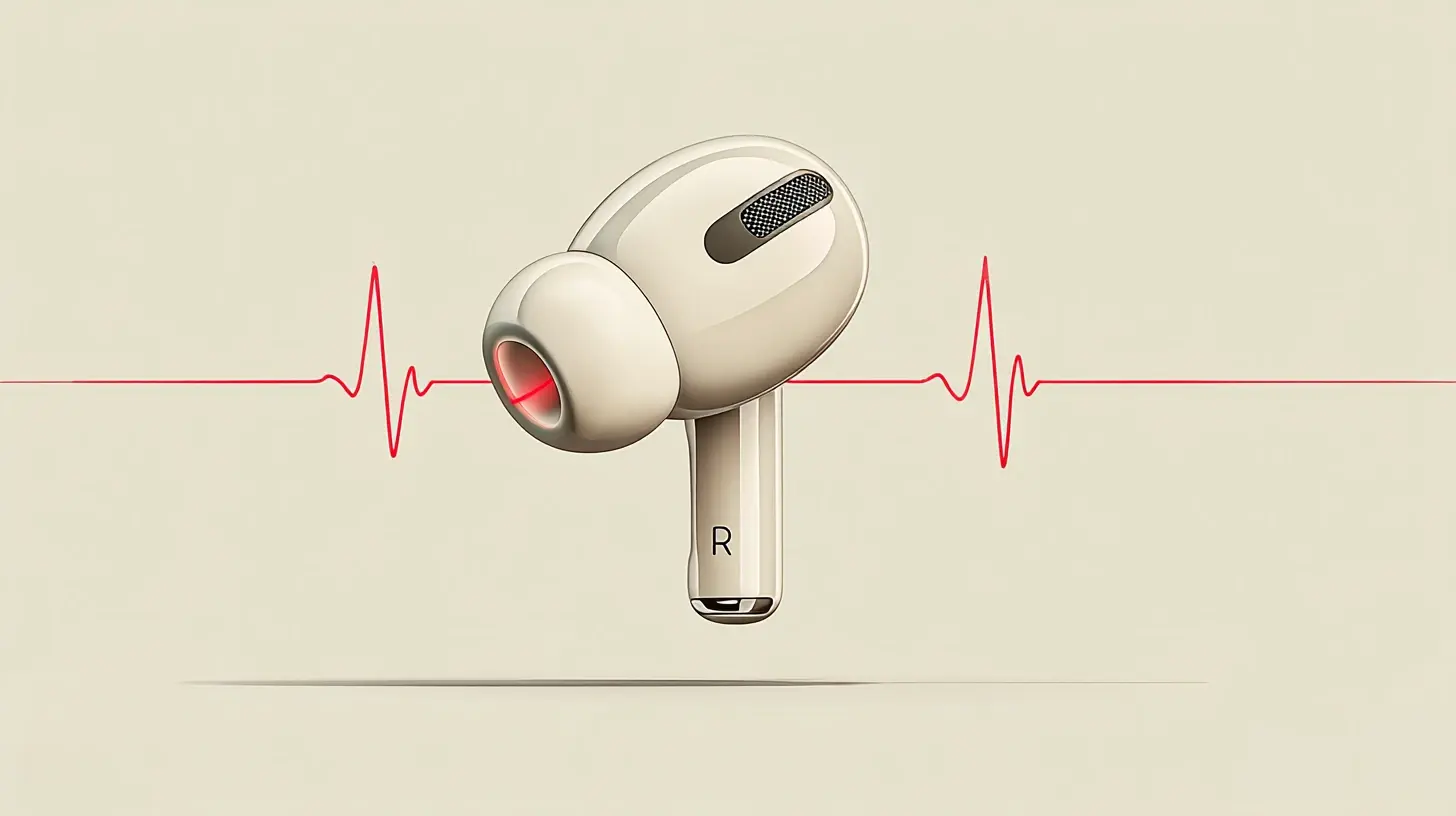
Researchers have developed a continuous authentication system called AccLock that leverages the tiny vibrations produced by a person's heartbeat inside the ear canal to verify their identity. Unlike traditional one-time biometrics such as fingerprint or face unlock, AccLock continuously monitors the wearer's identity throughout a session, revoking trust if the user changes. The system uses an accelerometer already present in many wireless earbuds, requiring no additional hardware. This approach addresses a critical security gap—the persistent trust granted after an initial unlock—by passively verifying the user every few seconds based on a physiological signal that is difficult to spoof.
The concept builds on decades of research into ballistocardiography (BCG), the measurement of mechanical forces generated by the heart. BCG signals have been used for medical monitoring, but AccLock is among the first designs to apply them for continuous authentication using a device millions of people already wear. The prototype uses a custom 3D-printed earbud with a standard commercial accelerometer sampling at 100 Hz, but the team also tested the system on Apple AirPods, albeit with reduced accuracy due to lower sampling rates. The core innovation lies in extracting distinctive cardiac features from the ear canal's unique acoustic and mechanical environment, creating a biometric signature that is both personal and persistent.
How AccLock Works: The BCG Signal
Each heartbeat sends a mechanical pulse through the body. In the ear, this pulse manifests as a ballistocardiogram (BCG) signal—a small vibration that an accelerometer can detect if placed correctly inside the ear canal. AccLock processes this raw motion data by filtering out ambient noise, such as head movements or environmental vibrations, then extracts features tied to the wearer's cardiac pattern. These features, including timing intervals, amplitude ratios, and frequency characteristics, form a unique template that is compared against a registered profile. The comparison occurs within a four-second sliding window that refreshes roughly every half second, allowing the system to continuously update its trust state.
Registration requires the user to sit still for about six minutes while the accelerometer captures a baseline BCG signal. The authors found that even two minutes of enrollment data can yield usable accuracy, making the setup practical for real-world deployment. Each authentication decision is based on the proximity of the current window's features to the stored template. If the match exceeds a threshold, the session remains trusted; otherwise, access is revoked. The system also updates the trust state in near real-time, ensuring that any change in wearer is detected within a few seconds.
Study Methodology and Accuracy Results
The study involved 33 participants with diverse demographics: varying ages, genders, and even individuals with common cardiac conditions such as bradycardia, tachycardia, coronary heart disease, and premature beats. The researchers tested AccLock under multiple conditions: sitting, lying down, light head movement, and music playback at high volume. Across all these scenarios, the system maintained error rates in the low single digits—between 2% and 5% false acceptance and false rejection rates. This performance was consistent across age groups and genders, demonstrating that the BCG signal is broadly reliable as a biometric identifier.
The most critical test for security was the handoff scenario—what happens when the legitimate wearer removes the earbud and another person picks it up. In nearly every trial, AccLock detected the change within seconds, invalidating the session. This highlights the core advantage of continuous authentication: it closes the window of vulnerability that persists after an initial login. The authors also tested the system's robustness to BLE packet loss and environmental vibrations, finding that error rates remained acceptable even with intermittent connectivity.
Challenges: Movement, Talking, and Long-Term Drift
While AccLock performed well under static conditions, it struggled when the user engaged in activities that produce mechanical artifacts in the same frequency range as the BCG signal. Walking significantly reduced accuracy, and running rendered the system almost unusable. Talking also caused problems because jaw motion and shifting contact between the earbud and the ear canal generate vibrations that interfere with the heartbeat signal. The researchers found that including some talking samples during enrollment partially recovered accuracy, but the system still required a trade-off between convenience and security during active speech.
Long-term drift presents another open question. The study tracked participants for two months and found that accuracy held steady for about six weeks before starting to slip by week eight. The authors attribute this decline to gradual changes in ear canal shape, earbud fit, posture, and behavioral habits. They proposed a background refresh routine that uses high-confidence samples—those with a strong match during the current session—to update the template over time. While this approach shows promise, the study's duration was insufficient to confirm its effectiveness over six months or a year. Additionally, a small subset of users consistently produced worse results, likely due to anatomical variations affecting how the earbud sits in the ear and how the BCG signal propagates. Until this gap is closed, any deployment would need a fallback mechanism, such as requiring an additional factor for users who cannot be reliably authenticated.
Hardware Limitations and the AirPods Experiment
The prototype used a custom 3D-printed earbud with a commercial accelerometer sampling at 100 Hz, which is ideal for capturing the fine-grained BCG signal. However, current consumer earbuds like Apple AirPods expose only downsampled motion data—around 25 Hz—to third-party developers. This lower sampling rate cuts available information, making it harder to extract distinctive cardiac features. The team adapted AccLock to work on AirPods by applying a lightweight retraining step, but error rates roughly doubled, from approximately 3% to around 7%. While 7% may be workable for some applications—such as reducing friction in personal entertainment—it is too high for high-security environments like financial trading floors or military communications.
The hardware dependence highlights a critical barrier to commercial adoption. Earbud manufacturers would need to provide access to raw accelerometer data, which they currently restrict for privacy and power consumption reasons. Even if they did, the accelerometer's placement within the earbud—typically in the stem or housing, not directly in the ear canal—might weaken the BCG signal. The AccLock prototype's custom design ensured the sensor was optimally positioned, a factor that cannot be assumed for off-the-shelf products.
Security Implications: Spoof Resistance and Privacy Surface
Most consumer biometrics, including facial recognition and voice authentication, have well-documented spoofing vulnerabilities. Attackers can use printed photos, deepfake audio, or silicone masks to bypass them. A BCG signal offers a higher degree of spoof resistance because it originates from the wearer's own cardiac mechanics inside the ear canal. The signal is difficult to capture from a distance—an adversary would need a high-sensitivity accelerometer placed inside the victim's ear—and even harder to replay in a way that matches the dynamic, living heartbeat pattern. The paper leans on this physiological origin as the foundation for its security claims.
However, the study did not test against an active adversary attempting specific attacks, such as injecting vibrations into the earbud, replaying a captured BCG stream, or reconstructing a target's cardiac signature from other sensor data (e.g., from a smartwatch or medical device). These attacks are theoretical today but could become feasible with advanced signal processing or side-channel information. The continuous streaming of biometric data over BLE also raises privacy concerns: a snapshot of the BCG signal could reveal not just identity but also cardiac health metrics, potentially leading to insurance discrimination or medical surveillance. The paper does not address these risks, and any production deployment would need strong encryption, anonymization, and user consent mechanisms.
The Future of Passive Biometrics
Continuous authentication has long been a goal for cybersecurity, but most implementations rely on explicit user actions—typing patterns, mouse movements, or periodic re-authentication. AccLock's use of an existing sensor in a widely worn device makes it a compelling candidate for seamless identity verification. It requires no user action, no additional hardware, and no conscious effort beyond wearing the earbuds. The energy overhead is small because the accelerometer already operates continuously for features like step counting or head-tracking; reusing its data for authentication adds minimal computational cost.
The key enabler for broader adoption will be cooperation from earbud vendors. If companies like Apple, Samsung, or Sony expose raw accelerometer streams to developers—a decision that involves balancing privacy, battery life, and potential liability—AccLock or similar systems could be deployed via software updates. Even with the current AirPods limitation, a 7% error rate might be acceptable for low-stakes applications, such as automatically locking a laptop when the user removes earbuds or adjusting music based on the wearer's identity.
Ongoing research will likely focus on improving robustness to movement and talking, perhaps by integrating additional sensors like gyroscopes or audio microphones to cancel out artifacts. The long-term drift issue may be mitigated by adaptive template updates that combine multiple high-confidence windows over weeks of use. The small group of users with poor performance could be addressed through personalized calibration or by fusing BCG with another passive biometric, such as ear canal geometry measured via ultrasound. For now, AccLock serves as a useful data point on where continuous authentication research is heading—away from explicit gestures and shared secrets, toward signals the body produces on its own.
Source: Help Net Security News