

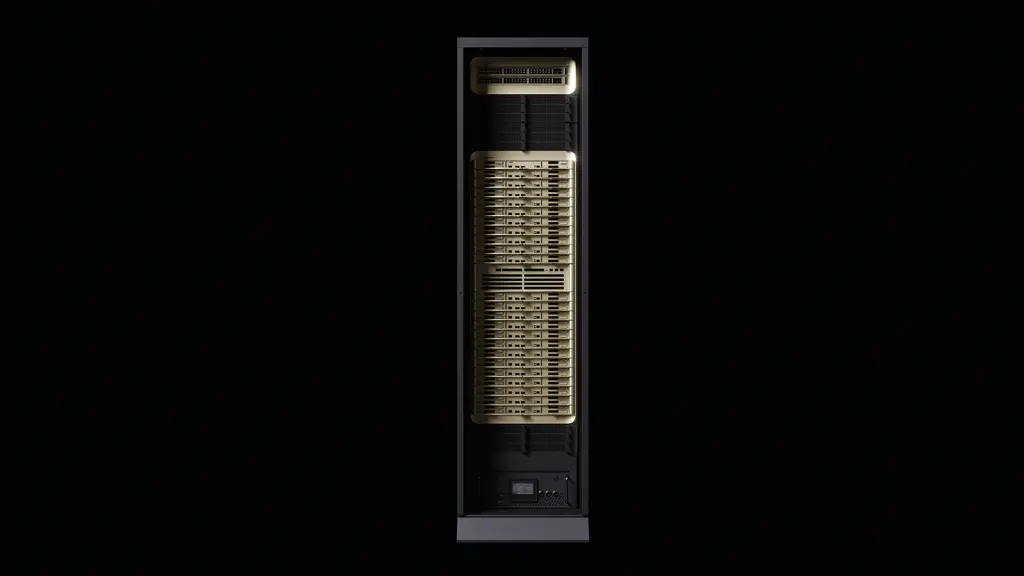
Nvidia has formally launched the Vera Rubin platform, a tightly integrated CPU and GPU architecture positioned as a major breakthrough in the convergence of artificial intelligence and high-performance computing (HPC) for scientific research. Announced at the ISC High Performance 2026 conference in Hamburg, the platform combines Nvidia’s Vera CPUs, Rubin GPUs, NVLink-C2C interconnects, ConnectX-9 SuperNICs, BlueField-4 DPUs, and a comprehensive software stack into what the company describes as a rack-scale supercomputer. The platform is designed to accelerate a broad range of scientific workloads, from climate modeling and computational fluid dynamics to quantum chemistry, energy exploration, and large-scale data center operations.
At the heart of the Vera Rubin platform is a tightly integrated architecture that leverages the high-bandwidth NVLink-C2C interconnect to link Vera CPUs and Rubin GPUs with minimal latency. The systems are built around direct liquid cooling and support up to 144 GPUs in a single rack. Nvidia claims a fully configured Vera Rubin system can deliver more than seven exaflops of AI performance for scientific workloads alongside five petaflops of native double-precision (FP64) computing performance. That would place a single Rubin system well ahead of the current top supercomputers on the TOP500 list, which is set to be updated later this week.
Memory bandwidth has been a key bottleneck for scientific applications, and the Vera Rubin architecture addresses this by increasing memory bandwidth by 2.8 times compared to the previous generation Blackwell GPU. “We are projecting up to four times performance boosts for memory-bound fluid dynamic applications,” said Dion Harris, senior director of HPC and AI factory solutions at Nvidia. “With Rubin, we are ensuring that the fundamental mathematical workloads driving scientific discovery run faster, more efficiently, and with greater precision than ever before.”
Nvidia has a long history in HPC, dating back to the early days of GPU-accelerated computing with the Tesla line. The company’s CUDA platform revolutionized scientific computing by enabling massively parallel processing on consumer and professional GPUs. Over the years, Nvidia has consistently pushed the envelope with architectures like Fermi, Kepler, Pascal, Volta, Turing, Ampere, Hopper, and Blackwell. The Vera Rubin platform represents the culmination of these efforts, combining not only the latest GPU architecture but also a custom CPU design—Vera—that is optimized for AI and HPC workloads. The Vera CPU is designed to handle complex orchestration tasks and provide high-bandwidth memory access, freeing the Rubin GPUs to focus on their primary computational duties.
The new platform is designed to support both traditional HPC simulations and emerging AI-driven scientific applications. Researchers will be able to train foundation models, deploy surrogate models, run high-fidelity simulations, and perform real-time data analysis on a single infrastructure. This unified approach is increasingly important as AI shifts from a tool that simply answers questions to an autonomous system that executes complex tasks. “Early data shows agentic AI increases simulation demand by up to ten times,” said Harris. The Vera Rubin platform is built to handle these growing demands, providing the raw compute power and memory bandwidth necessary to run sophisticated AI agents that can autonomously explore parameter spaces, run virtual experiments, and generate hypotheses.
Nvidia also announced that several leading research institutions have committed to building next-generation systems based on the Vera Rubin architecture. The Leibniz Supercomputing Centre (LRZ) in Germany will deploy Vera Rubin in its upcoming Blue Lion supercomputer, scheduled to enter service in 2027. Blue Lion is a second-generation exascale-class HPE Cray system and is expected to deliver approximately 30 times the computing power of LRZ’s current system. It will support research in astrophysics, environmental science, and life sciences. In the United States, the National Energy Research Scientific Computing Center (NERSC) will use Vera Rubin technology in Doudna, the next flagship supercomputer for the Department of Energy at Lawrence Berkeley National Laboratory. Built by Dell Technologies, Doudna will support large-scale HPC simulations, AI training, and data-intensive research.
Los Alamos National Laboratory has selected Vera Rubin technology for three new supercomputers: Mission, Vision, and Veritas. Mission will focus on national security workloads, while Vision will support open scientific research and AI-driven discovery. Veritas is specifically designed to enable agentic AI applications in scientific research, combining Rubin GPUs with standalone Vera CPU partitions. This configuration allows researchers to dedicate entire Vera CPU nodes to orchestrating complex AI workflows while the Rubin GPUs handle the heavy computational lifting.
In addition to these major research installations, Nvidia announced that systems based on the Vera Rubin NVL4 configuration from Dell and Super Micro are already being showcased at ISC High Performance 2026. These systems are aimed at enterprises and smaller research labs looking to leverage the power of the Vera Rubin platform without building a fully custom supercomputer. The NVL4 configuration combines four Rubin GPUs with two Vera CPUs on a single motherboard, providing a balanced compute and memory subsystem suitable for a wide range of scientific and AI workloads.
The Vera Rubin platform also includes significant advancements in networking and data movement. The ConnectX-9 SuperNIC provides high-speed Ethernet connectivity with support for remote direct memory access (RDMA) and advanced congestion control, enabling efficient scaling across multiple racks. The BlueField-4 DPU offloads storage, security, and virtualization tasks, freeing up CPU cycles for application processing. Combined, these components create a holistic infrastructure that can handle the massive data flows generated by modern scientific simulations and AI training runs.
Nvidia’s commitment to double-precision floating-point performance (FP64) remains a key selling point for traditional HPC users. While many AI workloads can run efficiently with mixed precision (FP16, BF16, or FP8), scientific simulations in fluid dynamics, climate modeling, and geoscience require the accuracy and dynamic range of FP64. “Nvidia’s roots are firmly planted in scientific computing, and native FP64 precision remains absolutely vital for accurate fluid dynamics, climate modeling, and geoscience,” said Harris. “We are committed to maintaining that support moving forward.” With 5 petaflops of native FP64 performance per rack, the Vera Rubin platform offers a significant improvement over previous generations and positions Nvidia to compete directly with traditional CPU-based supercomputers that have long dominated the TOP500 list.
The announcement of Vera Rubin comes at a time when the HPC community is grappling with the challenges of exascale computing, power consumption, and the integration of AI into traditional workflows. Many existing supercomputers rely on a mix of CPUs and GPUs from different vendors, leading to complex programming models and inefficient data movement. Nvidia’s platform aims to simplify this by providing a unified architecture where CPUs, GPUs, and networking are designed together from the ground up. This tight integration promises to reduce latency, increase bandwidth, and simplify software development, making it easier for scientists to port their codes and achieve high performance.
In addition to the hardware, Nvidia has updated its software stack to support the Vera Rubin platform. The CUDA toolkit has been enhanced to take advantage of the new memory subsystem and interconnect, while libraries like cuFFT, cuBLAS, and cuDNN have been optimized for the Rubin GPU’s tensor cores and double-precision units. Nvidia also announced updates to its AI enterprise suite, including support for agentic AI frameworks and accelerated data science tools. These software enhancements are designed to help researchers quickly adopt the new platform and achieve performance gains out of the box.
The Vera Rubin platform is expected to begin shipping to early-access customers in the second half of 2026, with broader availability in 2027. The first major systems, such as Blue Lion and Doudna, are scheduled to come online in 2027. As these systems become operational, they will provide scientists with unprecedented computational capabilities, enabling discoveries that were previously out of reach. Whether it is simulating the formation of galaxies, modeling the spread of airborne diseases, or accelerating the development of new materials, the Vera Rubin platform represents a significant leap forward in the infrastructure available to the scientific community.
Nvidia’s investment in the Vera Rubin platform also signals the company’s long-term commitment to the HPC market. While Nvidia has become synonymous with AI and deep learning, its roots in scientific computing run deep. The company’s GPUs have been used in systems on the TOP500 list for over a decade, and Nvidia has consistently expanded its HPC portfolio with new products and partnerships. The development of the Vera CPU is a particularly noteworthy move, as it gives Nvidia greater control over the entire system stack and allows for deeper optimizations that would not be possible with third-party CPUs. With Vera Rubin, Nvidia is positioning itself not just as a GPU vendor, but as a provider of complete supercomputing solutions that can compete with established players like Intel, AMD, and HPE.
As the HPC and AI worlds continue to converge, platforms like Vera Rubin will become increasingly important. The ability to run simulations, train AI models, and perform real-time analysis on a single architecture reduces complexity, speeds up research cycles, and enables new forms of scientific discovery. Nvidia has laid out a clear vision for the future of scientific computing, and the early adoption by leading research institutions suggests that the market is ready for this kind of integrated solution.
Source: Network World News