

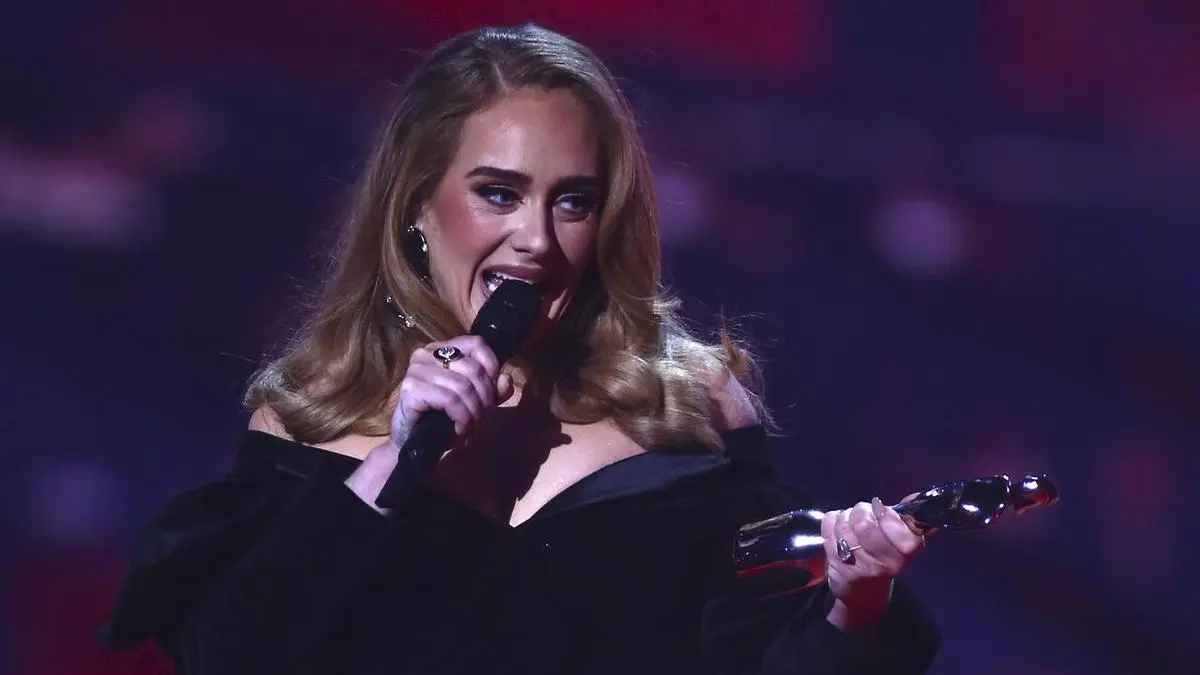
Adele, one of the world’s best-selling music artists, found herself at the center of a social media storm after accepting the Artist of the Year award at the 2022 Brit Awards. The ceremony, held at London’s O2 Arena, marked a historic shift: for the first time, the Brits eliminated male and female categories in favor of gender-neutral prizes. When Adele took the stage, she thanked the audience and then added, “I understand why the name of this award has changed, but I really love being a woman and being a female artist.” The remark drew applause in the venue but triggered a wave of criticism online, with some labeling her as transphobic and even a “TERF” (trans-exclusionary radical feminist).
The controversy highlights the growing tension between celebrating female identity and the push for gender inclusivity in entertainment. Adele’s comments came at a time when many awards shows, from the Grammys to the MTV Video Music Awards, are reexamining gendered categories. Supporters argue that her words were a simple expression of pride, while detractors claim they undermine non-binary and transgender artists. The incident also drew reactions from public figures like Piers Morgan, who defended Adele, and sparked opinion pieces in outlets such as The Spectator.
Background: The Brit Awards and Gender-Neutral Categories
The Brit Awards, the UK’s premier music ceremony, announced in late 2021 that they would scrap gendered categories starting in 2022. This decision followed similar moves by other award shows, including the MTV Video Music Awards, which introduced a gender-neutral “Best New Artist” category, and the Grammys, which reduced its number of gendered categories. The aim was to be more inclusive of non-binary and gender-fluid artists, but the change was not without controversy. Some traditionalists argued it erased the achievements of women in an industry where female artists have historically been underrepresented. Adele’s speech tapped directly into this debate.
Adele, born in Tottenham, London, rose to fame with her debut album 19 in 2008. She has since become one of the best-selling artists of all time, with hits like “Rolling in the Deep,” “Someone Like You,” and “Hello.” Her fourth album, 30, released in 2021, explores themes of divorce, motherhood, and self-discovery. Throughout her career, Adele has often spoken about her identity as a woman and the challenges female artists face. At the 2013 Brit Awards, she gave an acceptance speech that went viral after she was cut off mid-speech. This time, her words were again dissected, but for different reasons.
The Backlash: Accusations of Transphobia
Within hours of the ceremony, social media platforms were flooded with reactions. One Twitter user wrote, “Please, no, Adele, don’t be a TERF.” Another said, “Who’d have thought Adele was a transphobe and would use her platform to call for the destruction of the trans community?” Some users called for a boycott of her music. The accusations were based on the interpretation that by emphasising “being a woman,” Adele was rejecting the validity of transgender women and non-binary individuals. The term “TERF” has been increasingly used in online discourse to describe feminists who believe that sex is biological and immutable, and who exclude trans women from female-only spaces.
However, other users pushed back against this interpretation. They argued that Adele’s statement was a personal expression of pride, not a political statement against anyone. “She didn’t say anything negative about trans people. She just said she’s happy to be a woman,” one user wrote. The debate quickly became polarized. Some of the initial tweets accusing Adele of transphobia were later revealed to be satirical or exaggerated, but the conversation remained heated. Author Jane Symons tweeted, “A decade ago, if someone had said a woman would be criticised for the thought-crime of saying she liked being a woman, I would have laughed at such a ludicrous suggestion.” Another user noted, “So basically, proudly defining you’re a member of a specific sex is transphobic? It’s utter nonsense.”
Piers Morgan and Other Defenders
Piers Morgan, known for his outspoken conservative views, jumped into the fray. He tweeted, “How dare Adele have the brass-neck audacity to ignore gender-neutral bulls and take pride in being female? She’s clearly an evil TERF who must be cancelled immediately.” Morgan’s sarcastic support for Adele highlighted his own criticism of the gender-neutral movement. Other public figures, including The Spectator contributor Debbie Hayton, who is herself trans, defended Adele. Hayton wrote, “Here was a woman — who has sold tens of millions of albums — telling the world she was proud to be a woman. That’s something to celebrate, not condemn.”
The incident also sparked broader discussions about cancel culture and free speech. Many commentators pointed out that Adele had not made any derogatory remarks about trans people. Her speech lasted less than a minute, and she did not elaborate. Yet she immediately faced intense scrutiny. This pattern is not new: in 2021, singer Billie Eilish was accused of being transphobic for using the word “girl” in a song, and actor Elliot Page faced backlash for his transition. The line between inclusivity and erasure of female identity remains contentious.
Industry and Fan Reactions
The music industry largely stayed silent on the controversy, perhaps wary of alienating fans. However, several fan accounts and LGBTQ+ advocacy groups weighed in. Some expressed disappointment, while others urged calm. “Let’s not attack a woman for loving her gender. That’s not transphobic,” tweeted a popular LGBTQ+ blog. The British LGBT Awards did not comment. Adele herself did not address the backlash publicly; her social media remained focused on her music and personal life.
The Brit Awards themselves did not issue a statement regarding the controversy, although they had anticipated potential pushback when announcing gender-neutral categories. Organisers had stressed that the change was intended to be “forward-thinking” and “inclusive.” The ceremony featured performances by Ed Sheeran, Little Mix, and Sam Fender, but Adele’s speech became the most talked-about moment.
This is not the first time Adele has been at odds with online critics. In 2020, she was criticised for posting a photo in braids, with some accusing her of cultural appropriation. She later apologised and said the style was meant to show appreciation for Caribbean culture. That incident, like the current one, highlights how celebrity statements are constantly scrutinised through the lens of identity politics.
Cultural Context: The Evolution of Gender in Awards Shows
The debate over gender-neutral awards has been building for years. In 2013, the Brit Awards introduced separate male and female categories, but by 2018, many artists and critics questioned why such categories should exist at all. Non-binary artists like Sam Smith (who came out as non-binary in 2019) have advocated for reform. The Oscars remain gendered, but the MTV Video Music Awards has mostly eliminated them. The Recording Academy, which runs the Grammys, reduced its number of gendered categories but kept some.
Proponents of gender-neutral categories argue that they create a level playing field and reduce stereotyping. Critics, however, contend that they overlook the structural disadvantages faced by women in the music industry. According to a 2021 study by the USC Annenberg Inclusion Initiative, women represent only 22.5% of artists on the charts. Adele’s comment could be seen as a response to this imbalance: by highlighting her pride in being a woman, she was celebrating her gender in a field where women still fight for equal representation.
The transphobia accusations, however, introduce a different dimension. Some transgender activists argue that phrases like “being a woman” can be exclusionary if they imply a narrow definition of womanhood. They call for language that recognises trans women as women and non-binary individuals as valid. The tension is palpable: can one celebrate cisgender female identity without undermining trans identities? Adele’s experience suggests that the answer is not straightforward.
As the dust settles, the incident remains a case study in how quickly a well-intentioned remark can be misinterpreted. Adele has not said more on the matter, and her fans continue to support her. The Brit Awards will likely keep gender-neutral categories for future ceremonies, but the conversation about what it means to be a woman in the public eye will continue.
Source: 7NEWS News